



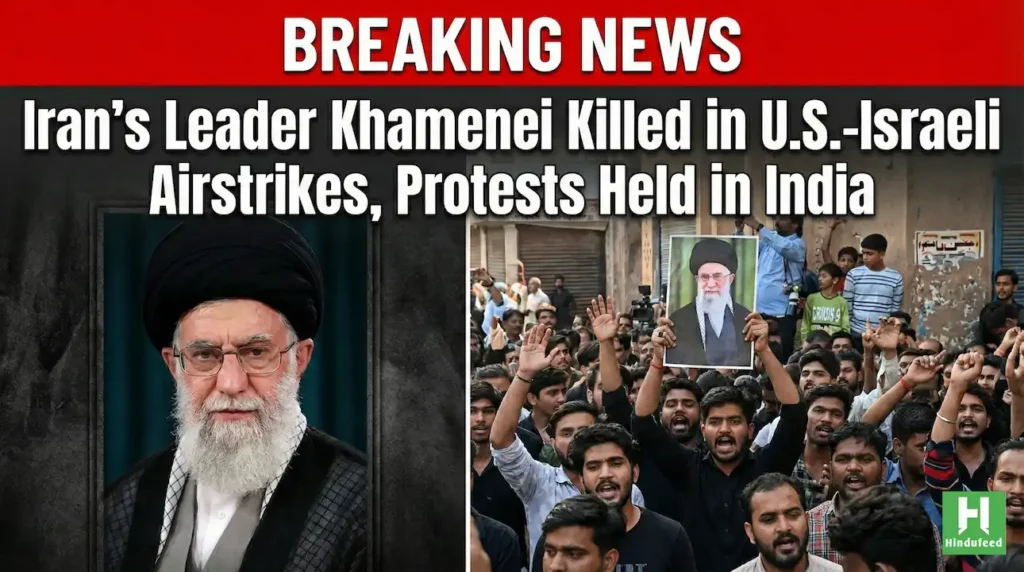
The geopolitical landscape of Middle East was deeply and irreversibly changed over the weekend when it was confirmed that the Iran Supreme Leader Ayatollah Ali Khamenei had died. The 86-year-old religious leader, who had guided the Islamic Republic for 36 years was killed in a large-scale joint air attack by the United States and Israel, operation called “Epic Fury” by the Pentagon and “Lion’s Roar” by Jerusalem.
The Midnight Strike on Tehran
The attack that occurred during the early hours of 28 February 2026 was focused on Khamenei’s heavily fortified compound in central Tehran. Iranian official media and satellite intelligence revealed that the home was destroyed by precision-guided munitions. Besides the Supreme Leader, among those killed were reportedly several high-ranking officials including:
- Abdolrahim Mousavi, Armed Forces Chief of Staff.
- Aziz Nasirzadeh, Defense Minister.
- Mohammad Pakpour, Commander of the IRGC Ground Forces.
U.S. President Donald Trump praised the raid as “justice” and said that Khamenei was “unable to escape highly advanced tracking systems”. Israel Prime Minister Benjamin Netanyahu on his part considered the incident “a historic moment” and called on the Iranian nation to “get their country back.”
A Regime in Flux
By the morning of March 1, the Islamic Republic of Iran Broadcasting (IRIB) had moved on from its first refusals to officially confirm the “martyrdom” of the Supreme Leader. The government has announced a 40-day national mourning period and a seven-day public holiday.
A provisional leadership council consisting of the President, the Judiciary Chief, and a Jurist from the Guardian Council has taken over. Nevertheless, the sudden vacuum has caused both visible grief and small-scale celebrations in Iran, while the Islamic Revolutionary Guard Corps (IRGC) has promised a “violent” response.
Protests Across India
The news of Khamenei’s death spread quickly to India, which has one of the worlds largest Shia Muslim communities. While the Indian Ministry of External Affairs urged “restraint and diplomacy” several communities across the country broke out into mourning.
- Hyderabad: In the historic Old City, several hundreds gathered at Purani Haveli and Enqelab Square equivalents, holding up black flags and pictures of the Ayatollah. The locals said that they had experienced a “spiritual loss” and they referred to Khamenei as a “cornerstone of the global Shia community.”
- Kashmir: It is reported that there were complete shutdowns and demonstration marches in some parts of the valley. While local leaders have called for peace, the crowds have been gathering for funeral prayers in absentia.
- Karnataka: In the Shia predominant village of Alipur where about 90% of the locals are Shia, shops were closed as thousands attended the procession which was led by the Anjuman, e, Jafaria Committee.
- Ajmer & Lucknow: Three days of mourning was declared by the religious leaders in these two historic cities and condolence meetings were held at the local Dargahs and Imambaras.
In New Delhi, the Iranian Embassy lowered the national flag to half-mast. In a strongly worded statement, the embassy called on “freedom-seeking governments” to condemn the strike, warning that “this great crime will not go unanswered.”
The world is now holding its breath as the “spiral of violence” unfolds. The danger of a full blown regional war has never been greater as Iran has already launched retaliatory strikes against Israeli and U.S. targets in the Gulf. For those in India who are mourning a religious icon, the loss is very close to home; for the rest of the world, it is a dangerous step into the unknown.
