



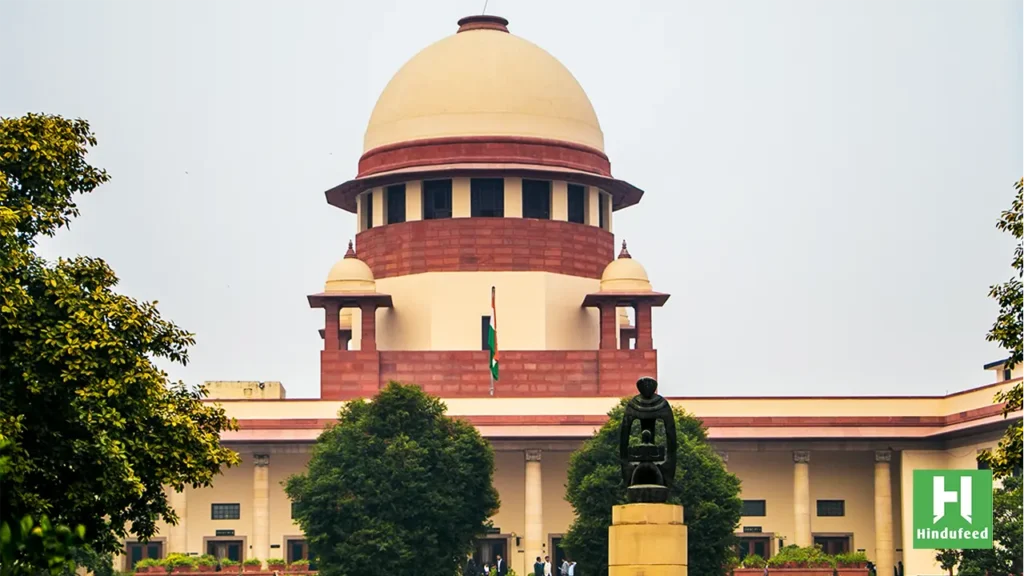
The sanctity of the Indian judicial system rests upon the unhindered ability of its officers to discharge their duties without fear of retribution or physical harm. When that foundation is shaken, the highest court in the land is forced to step in with measures that are as extraordinary as the crisis itself. On April 2, 2026, the Supreme Court of India issued a stinging rebuke to the West Bengal administration, characterizing the state as “uniquely polarized” following a harrowing attack on judicial officers performing field duties.
The observations made by the Bench represent one of the most severe indictments of a state’s law-and-order machinery in recent memory. By directing the immediate deployment of Central Forces to protect judges on “Spot Inspection Report” (SIR) duty, the apex court has effectively signaled a total loss of confidence in the local police’s ability—or willingness—to safeguard the arbiters of justice.
The Breakdown of Judicial Immunity
The core of the matter involves an incident that reads more like a scene from a political thriller than a legal proceeding. Judicial officers, acting under the express orders of the court to conduct a Spot Inspection Report (SIR) were reportedly mobbed and attacked by a crowd. In the hierarchy of legal procedures, the SIR is a vital tool used by judges to verify ground realities in civil and criminal disputes. For an officer of the court to be physically assaulted while executing this duty is not merely a local crime; it is an act of contempt against the sovereign authority of the judiciary.
The Supreme Court expressed a sense of profound shock during the hearing. The Bench noted that if judicial officers, who represent the majesty of the law, are not safe while performing their official functions, the common citizen stands no chance. The court’s frustration was palpable as it scrutinized the state’s explanation for the security failure. The state’s inability to prevent a mob from obstructing a court-ordered inspection was viewed by the Bench not as an isolated lapse, but as a systemic failure rooted in a deeply fractured political landscape.
“Never Seen Such a Polarised State”
Perhaps the most significant aspect of the proceedings was the Court’s verbal characterization of West Bengal’s social and political climate. The Bench remarked that it had “never seen such a polarised state” where every action and every incident is viewed through a prism of extreme partisan loyalty.
This observation goes beyond the immediate attack on the judges. It highlights a worrying trend where the neutral space required for the judiciary to function is being swallowed by political friction. When a state becomes so polarized that even the neutral “referee”—the judge—is treated as a combatant by mobs, the rule of law enters a state of terminal decline. The Court noted that this atmosphere of hostility has made it impossible for judicial officers to conduct inspections in certain pockets of the state without facing intimidation.
The Mandate for Central Forces
Faced with this grim reality, the Supreme Court took the rare step of bypassing the state’s executive jurisdiction over “Police and Public Order.” Under normal circumstances, the security of the judiciary is a state subject. However, invoking its inherent powers to ensure the administration of justice, the Court directed that Central Forces (such as the CRPF or CISF) be utilized to provide a security cover for judges during SIR duties.
This directive serves two purposes. First, it provides a physical “shield” for the judges, ensuring that they can record findings on the ground without a blade at their throats. Second, it serves as a symbolic “no-confidence motion” against the state police. The Court’s message was clear: if the state cannot or will not protect the messengers of the law, the Union’s forces will have to step into the breach.
The Bench was particularly dismissive of the state’s assurances that “adequate measures” would be taken in the future. The Court pointed out that previous warnings and standard operating procedures had failed to prevent the current crisis, necessitating a shift to a more robust, independent security apparatus.
Accountability and the Path Forward
The Court did not stop at security arrangements; it also demanded accountability from the high-ranking officials of the West Bengal administration. The “slamming” of officials was not restricted to the local police station level but extended to the top echelons of the state’s home department. The Bench questioned how such a coordinated attack could occur without the tacit approval or gross negligence of those in power.
The state has been directed to submit a comprehensive report on the identities of the attackers and the actions taken against them. The Court hinted that any attempt to “whitewash” the incident or shield the perpetrators would lead to even stricter judicial interventions.
The Broader Legal Implications
This development sets a significant precedent for judicial security across India. It raises fundamental questions about the independence of the judiciary in states experiencing high levels of civil and political unrest. If judges require paramilitary protection to simply look at a piece of disputed land or verify a construction site, the “ease of justice” is severely compromised.
Furthermore, the “polarized state” comment by the Supreme Court will likely resonate in other ongoing litigations involving West Bengal, ranging from post-poll violence cases to investigations into multi-crore scams. It establishes a judicial recognition of a “special situation” in the state that may justify federal intervention in matters that are typically handled by state agencies.
Conclusion
The Supreme Court’s intervention in the West Bengal judicial attack case is a desperate remedy for a desperate situation. By ordering Central Forces to guard judges, the Court has drawn a line in the sand. It has reminded the executive that while political parties may fight for power, the ground on which they fight must remain governed by the law.
For the people of West Bengal, the sight of Central Forces escorting a judge to a field inspection is a somber reminder of the fragility of their state’s institutions. For the rest of the country, it is a warning of what happens when political polarization is allowed to override the basic protections afforded to the dispensers of justice. The “SIR duty” may seem like a technicality, but as the Supreme Court has made clear, if a judge cannot walk the streets of a state safely, the law itself is in a state of siege.
