


Close Menu
Hindufeed
    What's Hot

    Train Delayed by 6 Hours, But Man Fined ₹520 After Platform Ticket Expires at Kalyan Station

    June 11, 2026

    Woman Awarded Rs 35,000 Compensation After KSRTC Bus Leaves Early, Causing Her to Miss Hospital Appointment

    June 10, 2026

    Air India Ordered to Pay Rs 74,131 After Student Was Wrongly Charged for Extra Baggage

    June 9, 2026
    Facebook X (Twitter) Instagram
    Trending
    • What Happens When AI Knows More About You Than Your Family Does?
    • Supreme Court Says Husband Not Speaking to Wife 13 Day Does Not Amount to Cruelty, Sets Aside Conviction in Wife’s Suicide Case
    • Facebook Goes Down Globally, Users Face Issues; Instagram Also Down for Some Users
    • Holding Public Office Doesn’t Mean Losing Right to Privacy: Karnataka High Court
    • Train Delayed by 6 Hours, But Man Fined ₹520 After Platform Ticket Expires at Kalyan Station
    • Woman Awarded Rs 35,000 Compensation After KSRTC Bus Leaves Early, Causing Her to Miss Hospital Appointment
    • Air India Ordered to Pay Rs 74,131 After Student Was Wrongly Charged for Extra Baggage
    • Pakistan’s Expanding Satellite Surveillance Network Draws Attention Beyond the Space Sector
    Facebook X (Twitter) Instagram YouTube LinkedIn
    HindufeedHindufeed
    Subscribe
    Monday, June 15
    • Home
    • About Us
    • Features
    • Latest News
    • Contact Us
    Hindufeed
    Home»Law

    Supreme Court Says Husband Not Speaking to Wife 13 Day Does Not Amount to Cruelty, Sets Aside Conviction in Wife’s Suicide Case

    NiyatiBy NiyatiJune 12, 20264 Mins Read
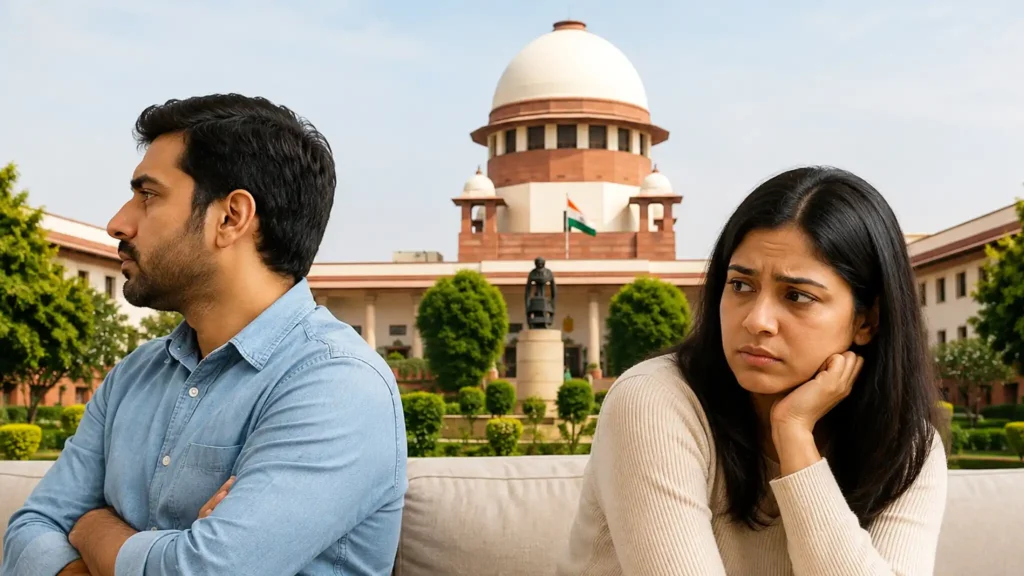
    Supreme Court Says Husband Not Speaking to Wife 13 Day Does Not Amount to Cruelty
    Share
    Facebook Twitter LinkedIn Pinterest Email

    The Supreme Court has ruled that a husband’s refusal to speak to his wife for 13 days cannot, by itself, be treated as cruelty under Section 498A of the Indian Penal Code, observing that periods of silence and disagreements are often a part of married life.

    In a May 7, 2026 judgment (Jayesh Kanna v. The Assistant Commissioner Law and Order), a bench comprising Justice J.K. Maheshwari and Justice Atul S. Chandurkar acquitted a man who had been convicted of cruelty following the suicide of his wife. The Court set aside the findings of both the trial court and the Madras High Court, holding that the evidence on record was insufficient to sustain a criminal conviction.

    The legal battle arose from the death of a woman who died by suicide while staying at her parental home. The prosecution’s central argument rested on the allegation that the husband had not spoken to her for about 13 days before the incident. This period of non-communication became one of the central factors relied upon by the prosecution to argue that the woman had been subjected to mental cruelty.

    The trial court accepted the prosecution’s case and convicted the husband under Section 498A IPC. The conviction was later upheld by the Madras High Court, which agreed that the husband’s conduct amounted to cruelty.

    Challenging these findings, the husband approached the Supreme Court. After examining the facts and evidence, the apex court found that the circumstances relied upon by the prosecution did not meet the legal threshold required to establish cruelty under the law.

    The bench observed that differences between spouses are a reality of married life and that communication between partners may occasionally break down because of disagreements, misunderstandings or emotional conflicts. Such situations, the Court noted, cannot automatically be interpreted as criminal conduct.

    The judges remarked that merely because the husband did not speak to his wife for 13 days does not, “in any stretch of imagination”, amount to cruelty within the meaning of Section 498A.

    According to the Court, criminal liability cannot be imposed simply because a relationship experiences strain or because one spouse chooses not to communicate for a period of time. To attract the offence of cruelty, there must be evidence showing conduct of a much more serious nature, capable of causing grave mental or physical harm or driving a person towards an extreme step.

    The Court emphasized that criminal law requires proof of specific acts that fall within the legal definition of an offence. A conviction cannot rest on assumptions, emotions or speculation arising from a troubled relationship.

    While setting aside the conviction, the Supreme Court also directed that the husband’s passport be returned, bringing an end to the criminal proceedings against him.

    The judgment is significant because it addresses an issue that frequently arises in matrimonial disputes whether emotional distance or silence between spouses can amount to cruelty. By drawing a distinction between ordinary marital discord and criminal wrongdoing, the Court reiterated that not every unhappy phase of a marriage falls within the scope of criminal law. Legal experts note that Section 498A remains one of the most important legal safeguards available to married women facing genuine abuse, harassment or cruelty. At the same time, courts have consistently maintained that the provision must be applied on the basis of evidence that clearly establishes the ingredients of the offence.

    Ultimately, the Court concluded that the evidence presented in the case failed to establish the offence under Section 498A IPC. With that finding, it acquitted the husband and set aside the conviction that had been upheld by the lower courts.

    Case: Jayesh Kanna v. The Assistant Commissioner Law and Order (West) & Others

    Bench: Justice J.K. Maheshwari and Justice Atul S. Chandurkar

    Date of Judgment: May 7, 2026

    Share. Facebook Twitter LinkedIn Telegram WhatsApp Threads Copy Link
    Niyati
    • Website
    • LinkedIn

    Niyati is a digital content writer and current affairs commentator specializing in real-time news and viral internet culture. Known for her ability to transform complex daily headlines into smooth, highly engaging narratives, she focuses on bridging the gap between breaking news and reader-centric storytelling. Her editorial expertise spans human-interest journalism, behavioral psychology, and evolving social trends. Niyati is dedicated to delivering accurate, scannable, and deeply relatable articles that cut through the noise of the modern digital landscape.

    Keep Reading

    Holding Public Office Doesn’t Mean Losing Right to Privacy: Karnataka High Court

    Woman Awarded Rs 35,000 Compensation After KSRTC Bus Leaves Early, Causing Her to Miss Hospital Appointment

    Air India Ordered to Pay Rs 74,131 After Student Was Wrongly Charged for Extra Baggage

    Education in mother-tongue – Landmark Judgement by Supreme Court on Elevation of Linguistic Rights

    CJI Surya Kant calls some unemployed youth ‘Parasites’, ‘cockroaches’, Become ‘Media’ and Attack System, Faces Massive Backlash

    Free and Fair Elections Can Happen Only if There Are Independent Election Commissioners, SC Says

    Add A Comment
    Leave A Reply Cancel Reply

    Editors Picks

    What Happens When AI Knows More About You Than Your Family Does?

    June 13, 2026

    From Kota to Adulthood: Why Emotional Intelligence May Matter More Than Your 10th School Mark Sheet

    May 13, 2026
    Latest Posts
    Advertisement

    This is Hindufeed a digital news media, a true voice for the unheard. We uncover truths beyond legacy media, covering the latest news, stories that matter, and issues often ignored. From discrimination and corruption to voices of hope and change, we bring facts that fight and stories that inspire. Follow us for awareness, truth, and the courage to stand for a stronger tomorrow.:

    Facebook X (Twitter) Instagram Pinterest YouTube LinkedIn
    Hindufeed
    Facebook X (Twitter) Instagram Pinterest
    • Home
    • About Us
    • Contact Us
    • Latest News
    • sports
    • Privacy Policy
    © Hindufeed. All Rights Reserved

    Type above and press Enter to search. Press Esc to cancel.