












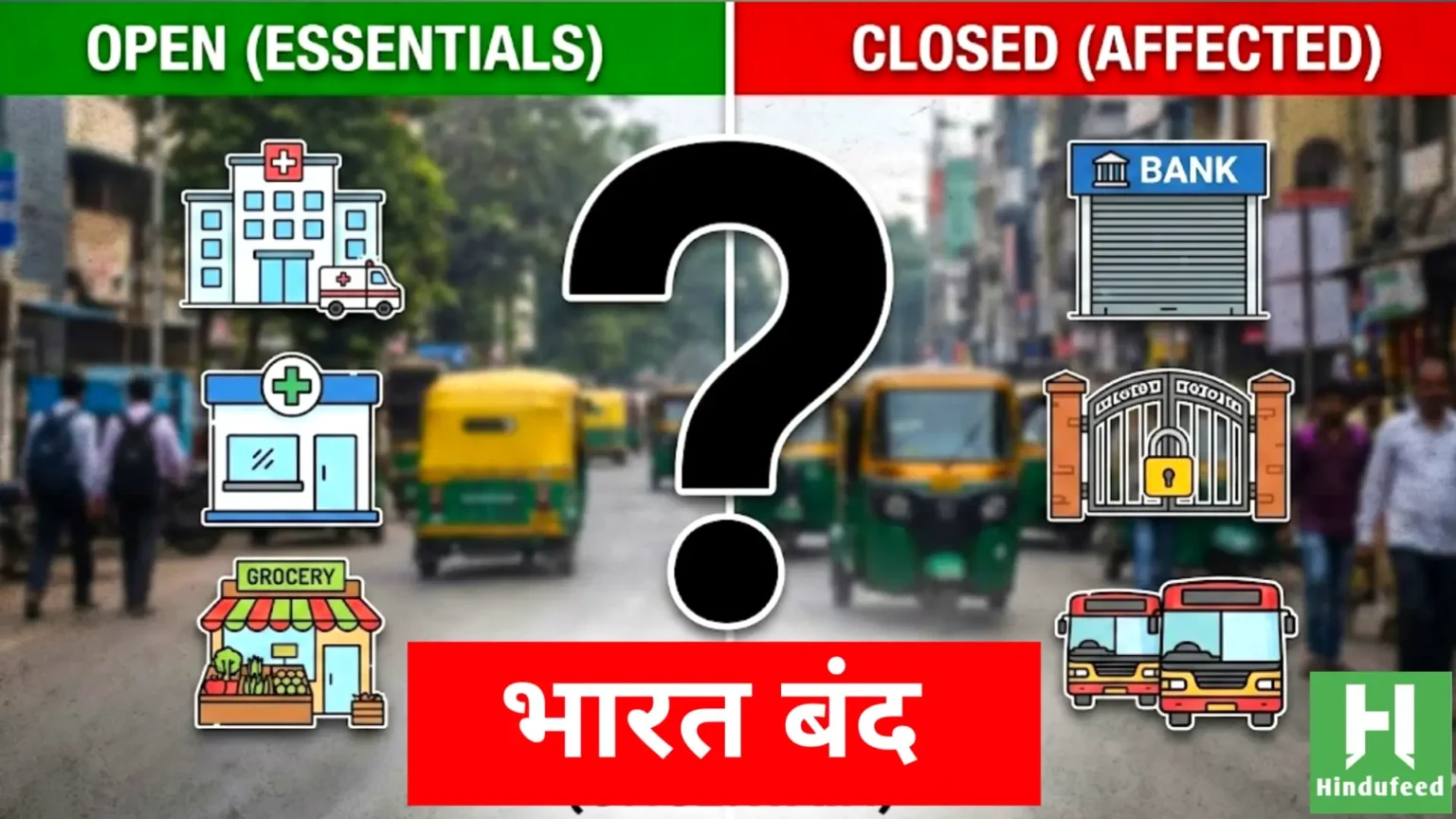
A nationwide Bharat Bandh is being called today, February 12, 2026 by a joint forum of 10 central trade unions, including INTUC, AITUC, HMS, CITU, AIUTUC, TUCC, SEWA, AICCTU, LPF, and UTUC.
The bharat bandh is announced by the trade unions and farmers against labour reforms, the recently announced India-US trade deal, privatisation, new labour codes, and other economic policies seen as anti-worker and anti-farmer. This protest received support from the Samyukt Kisan Morcha (SKM) and other farmers’ organisations.
Due to the protests many sectors are likely to be affected today, especially in these states like Kerala, Karnataka, West Bengal, and parts of others can see a stronger impact of the bharat bandh.
What’s Likely to Be Closed or Disrupted
- Schools and colleges: In Some states including Kerala, Karnataka, west bengal, and other non-bjp state, school and colleges may remain closed or see low attendance.
- Markets and Shops: In areas with strong participation, local markets and shops could stay closed or operate with limited hours.
- Banks: Many bank employee unions are joining the strike. Public sector banks like SBI and BoB are trying to keep branches running, but services especially at counters may slow down or see interruptions.
- Public Transport: State buses, auto services and local transport might be reduced. In some cities you’ll see fewer buses, delayed schedules or cancellations.
- Traffic: Road movement in parts of the country may be slow because of protests and reduced transport.
What’s Expected to Be Open or Running
- Emergency Healthcare: Hospitals, ambulances and emergency support services are expected to operate normally.
- Air Travel and Railways: Indian Railways and airlines are operating normally. But try to reach airport/station early because road traffic might delay you.
- Private Offices: Most corporate and private workplaces are expected to function as usual, unless local staff decide to join the strike.
- ATMs & Digital Banking: Cash machines and online banking services should work normally even if physical branches face staff shortages.
- Petrol pumps, essential goods shops – generally open, especially in less-affected areas


