











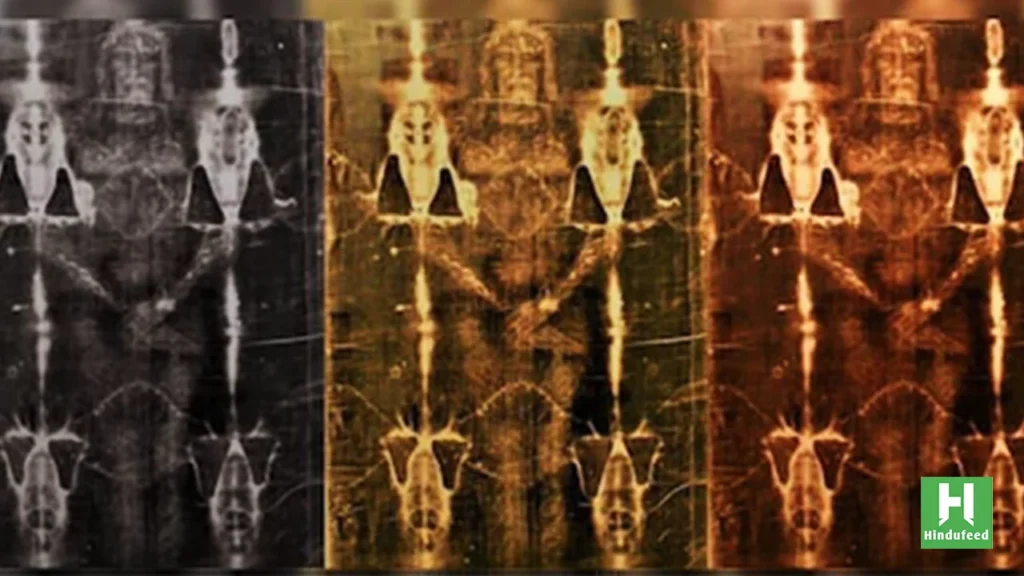
The Shroud of Turin has long been the most scrutinized piece of fabric in human history. To some, it is the literal burial cloth of Jesus of Nazareth; to others, it is a masterclass in medieval forgery. However, the debate shifted from the visual to the molecular in a landmark genomic study that unearthed a surprising secret hidden within the linen’s fibers: a distinct genetic trail leading straight to the Indian subcontinent.
For centuries, the Shroud of Turin was a matter of faith. In 1988, it became a matter of chemistry when carbon dating suggested it was a medieval creation. But in the mid-2010s, and with further refinements leading into 2026, it became a matter of genomics.
A team of researchers, led by geneticist Gianni Barcaccia of the University of Padua, performed a massive sequencing of mitochondrial DNA (mtDNA) recovered from dust particles vacuumed from the Shroud. While they expected to find European and Middle Eastern traces, the presence of Haplogroup H33—a lineage predominantly found in India—sent shockwaves through the archeological community.
I. A Brief History: From the Tomb to Turin
To understand the significance of the DNA, one must understand the Shroud’s documented (and rumored) itinerary.
The “Empty” Years (33 AD – 1353 AD)
Biblical tradition suggests the cloth was taken from the tomb in Jerusalem. However, it largely vanished from the record until 1353, when it appeared in the possession of a French knight, Geoffroi de Charny. Legends like the “Mandylion of Edessa” theory suggest the cloth traveled from Jerusalem to Turkey (Edessa and Constantinople) before being looted during the Crusades.
The Turin Era (1578 – Present)
The Shroud was eventually moved to the Cathedral of Saint John the Baptist in Turin, Italy. It survived fires, wars, and the 1988 Carbon-14 dating which claimed the linen was manufactured between 1260 and 1390 AD. Proponents of the Shroud’s authenticity have contested this, arguing the tested sample was part of a “medieval repair” or contaminated by centuries of handling.
II. The DNA Study: Reading the Dust
The 2015 study published in Scientific Reports utilized “Next-Generation Sequencing” to analyze the DNA of plant and human origin found on the cloth. Unlike previous tests that looked at the fabric itself, this looked at the biographical history of who and what had touched it.
The Findings: A Global Passport
The study found that the Shroud is a “genetic melting pot.” DNA from across the globe was found on the fibers, including:
- Western Europe: Likely from the centuries the cloth spent in France and Italy.
- The Levant: DNA associated with the Middle East (Syria, Jordan, Palestine).
- East Asia and the Americas: Likely from modern pilgrims and researchers.
- South Asia (India): The most unexpected finding.
III. The Indian Trace: Haplogroup H33
The presence of Indian DNA is not a peripheral finding; it is a specific, rare genetic marker. Haplogroup H33 is a mitochondrial lineage found in the Indian subcontinent, particularly among certain ethnic groups in North and East India.
How did Indian DNA get on a Middle Eastern/European Shroud?
There are three primary scientific hypotheses currently being debated:
- The Manufacturing Hypothesis: Some researchers suggest the linen itself—or at least the thread—may have been manufactured in India. Ancient trade routes, including the Silk Road, saw high-quality fabrics moving from India to the Roman Empire.
- The Travel Hypothesis: If the Shroud was moved out of Jerusalem during the early centuries, it may have been hidden in locations frequented by travelers from the East, or it may have traveled further East than previously thought before returning to Europe.
- The “Jesus in India” Theory: While highly speculative and largely dismissed by mainstream theologians, some peripheral historians use this DNA finding to bolster the “Lost Years” theory, which claims Jesus traveled to India during his youth or survived the crucifixion and fled there.
IV. Data Snapshot: Genetic Origins on the Shroud
| Genetic Origin | Probable Source | Context |
| Middle Eastern (Levantine) | Jerusalem/Palestine | Consistent with the Shroud’s traditional origin. |
| Indian (H33/R0a) | India/South Asia | Suggests either Indian manufacture or eastern trade routes. |
| European (H1/H3) | France/Italy | Reflects the Shroud’s history in European cathedrals. |
| North African | Egypt/Libya | Potential travel through early Christian centers. |
V. Botanical Evidence: The Plants of the East
The DNA study didn’t just find human hair and skin cells; it found pollen and plant DNA.
In addition to the human H33 haplogroup, the Shroud contains traces of DNA from plants that are native to East Asia and India. The presence of these plant species reinforces the idea that the cloth spent a significant amount of time in an environment where Indian goods or flora were present.
Scientists suggest that if the cloth were a simple medieval European forgery, it is highly unlikely the “forger” would have had access to—or the foresight to include—specific pollen and DNA from the Indian subcontinent.
VI. The Conflict: Faith vs. Forensics
The Indian DNA finding has complicated the narrative for both skeptics and believers.
- For Skeptics: It proves that the Shroud has been “contaminated” so thoroughly that any test—including Carbon-14 or DNA—cannot provide a definitive date or origin. They argue the Indian DNA likely came from a 19th-century merchant or a specific pilgrim.
- For Believers: It suggests the Shroud’s history is far more expansive than the European Middle Ages. They argue the rare H33 marker points to a 1st-century Roman world where Indian trade was a luxury staple, supporting the idea that the cloth was a high-quality “Sindon” (linen) from the East.
VII. Frequently Asked Questions (FAQ)
1. Does this prove the Shroud is real?
No. DNA only tells us who or what touched the cloth, not when they touched it or who the image on the cloth is. It adds a “geographic layer” to the mystery but doesn’t solve the “authenticity” riddle.
2. Is there a connection between the Shroud and the “Vedic” traditions?
Some scholars have noted the similarity between the “burial rites” depicted on the shroud and certain ancient Eastern purification rituals, but this remains a niche area of comparative religion rather than a scientific consensus.
3. What is the latest update as of 2026?
Recent 2026 refinements in Paleogenomics (the study of ancient DNA) have confirmed that the Indian DNA is “deeply embedded” in the fibers, suggesting it is not a superficial modern contamination but was likely present when the cloth was originally handled or manufactured.
Final Verdict
The Shroud of Turin remains a “Silent Witness” that refuses to be quiet. The discovery of Indian DNA markers like Haplogroup H33 has transformed the Shroud from a Euro-centric relic into a global artifact. Whether it was woven in the looms of ancient India or simply touched by an Indian traveler on the Silk Road, the cloth proves that the story of the Divine—and the story of humanity—has always been interconnected.
For the readers of hindufeed.in, this revelation highlights a fascinating truth: India’s influence has always been woven into the fabric of global history, sometimes in the most unexpected places.
Do you believe the ‘Indian connection’ points to a forgotten history of the Shroud? Or is it just another piece of the complex genetic puzzle? Let us know your thoughts in the comments!


