










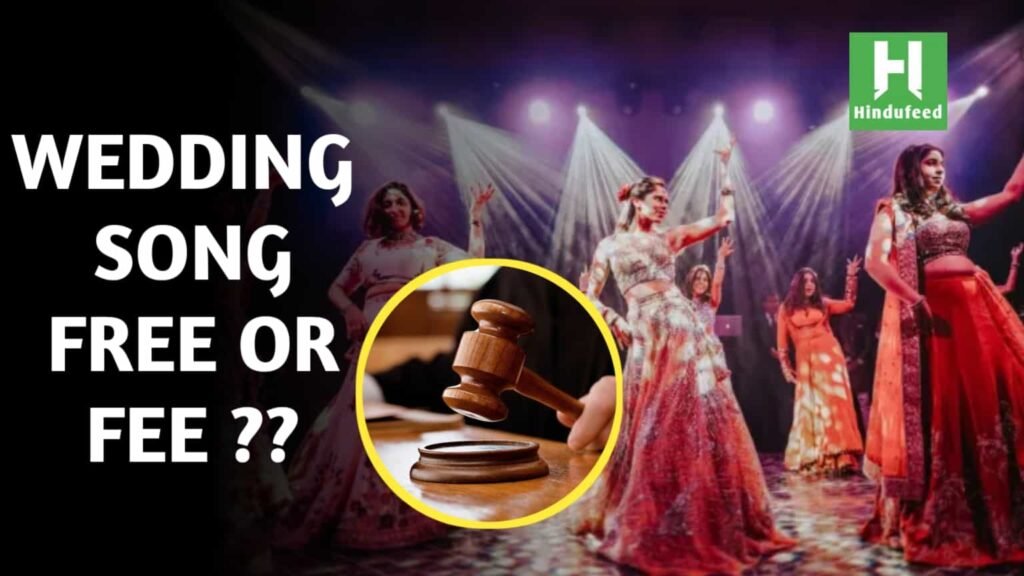
Music is the heart of an Indian wedding. It is hard to imagine a wedding ceremony without a DJ or a live band for a high energy Baraat and Sangeet. However, a legal dispute is going on quietly: Are the wedding planners and hosts required to obtain a music license and pay the corresponding fees?
According to a recent analysis of Indian copyright law, even though weddings are an exception, they are not a “free pass” for everyone. Here is a summary of the present legal situation in respect of music, marriages, and copyright exceptions.
What’s the LAW States: Section 52(1)(za)
The primary law governing this in India is the Copyright Act of 1957. Under Section 52(1)(za), the law provides a specific exception. It states that playing music during a “bona fide religious ceremony”—which explicitly includes marriage processions and social festivities associated with a wedding—does not constitute copyright infringement.
In simple terms: The law recognizes that weddings are sacred and social events, not commercial ones, so you shouldn’t have to pay royalties to play Songs in Weddings.
The Conflict
Although the law appears to be straightforward, the truth is far from simple. Entities such as PPL (Phonographic Performance Limited) and IPRS (Indian Performing Right Society), which handle the distribution of royalties to artists and record companies, have a point when they say that big, budget destination weddings and events which are handled by commercial companies ought not to get away with not paying.
This has led to several high-profile court battles.
What Have the Courts Decided?
Over the last couple of years, various High Courts (Punjab & Haryana, Bombay, and Delhi) have explained three major points:
The “Case-by-Case” Rule:
Courts have ruled that you cannot have a “blanket” exemption. Simply on account of it being a wedding, it does not automatically qualify for free music. The court will examine the nature of the event. In case the event is purely commercial or involves profit, making by an event management company, the exception may not apply.
Executive vs. Judiciary:
In some states, local governments have issued notices instructing the police not to allow copyright societies to collect fees from weddings. However, the Courts have overturned these decisions. They held that the government cannot “interpret” the law that is the judges’ job. These executive orders were considered as exceeding their limits.
A Shield, Not a Sword:
In a landmark observation, the Delhi High Court said that the wedding” exception is a “shield” (a defense) and not a “sword” (a right). This implies that an event organizer cannot seek a court declaration in advance that they do not require a license. Moreover, they can rely on the law as a defense if they are subsequently sued for infringement.
Conclusion
In case of a classical family wedding, usually, the law is on your side as you are covered under the religious and social exception.
On the other hand, if you are an event management company or a luxury hotel hosting a big, commercially, driven destination wedding, the “wedding exception” is not a loophole. You might still have to check whether a license is necessary to avoid getting into legal issues.
The “Marriage Music” exception aims at preserving the sanctity of Indian traditions, rather than offering a loophole for commercial exploitation. While the legal world is figuring this out, the message is music should be enjoyed, but it is equally important to keep the spirit of the law and artists’ rights intact.


