



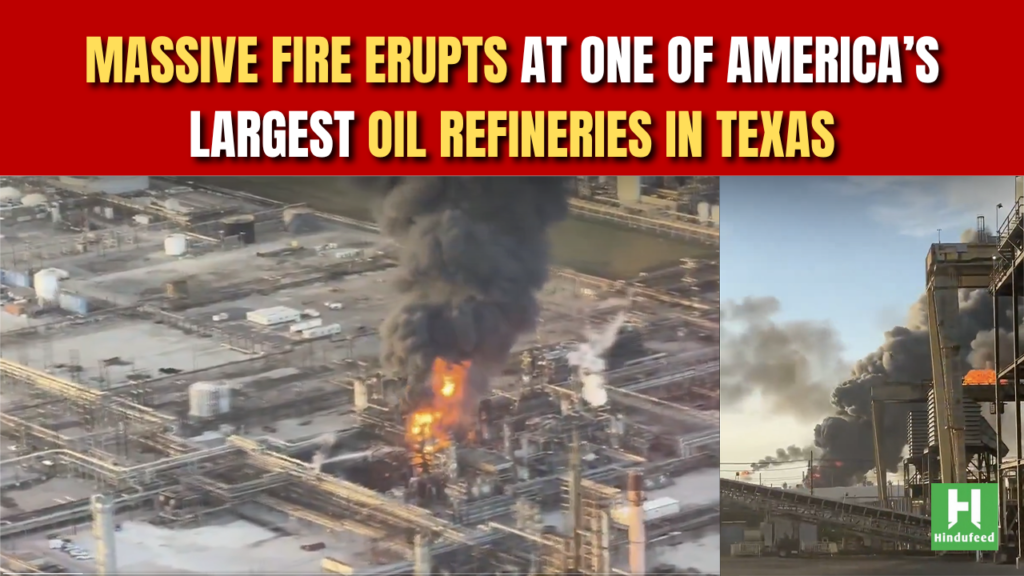
For the residents of Port Arthur, Texas, the evening of March 23, 2026, began like any other pre-spring Monday. But at approximately 6:30 PM CDT, the serenity of the Gulf Coast was shattered by a deafening boom that rattled windows as far as 11 miles away. The source was the Valero Port Arthur Refinery, a sprawling 4,000-acre industrial giant that serves as the heartbeat of the region’s economy.
The explosion, which was followed by a ferocious fire that raged for over five hours, has forced a complete shutdown of the facility. With a refining capacity of roughly 435,000 barrels per day (bpd), the loss of this plant—even temporarily—threatens to send already record-high American gas prices into a new, uncharted stratosphere.
I. Ground Zero: The “Boom” and the Black Plume
The sheer scale of the blast prompted immediate comparisons to an earthquake. Witnesses across South Jefferson County reported a vibration so intense it shook car windows and knocked items off shelves. Within minutes, the evening sky was choked by a dense, oily plume of black smoke, visible from satellite imagery and by residents in neighboring Groves and Nederland.
The Timeline of the Emergency:
- 18:30 (Monday): The initial explosion occurs, reportedly centered near the refinery’s high-pressure processing units.
- 18:45: Port Arthur Police and Fire Departments issue an immediate “Shelter-in-Place” order for the west side of the city, including Sabine Pass and Pleasure Island.
- 19:30: State Highways 82 and 87 are barricaded by the Texas Department of Transportation to prevent motorists from entering the fallout zone.
- 23:30: Valero’s internal emergency teams, assisted by municipal fire crews, finally bring the primary blaze under control.
II. The Human Impact: Students Stranded and Sulfur Smells
While the industrial damage is extensive, the human narrative of the Port Arthur explosion is one of isolation. Because the Valero refinery sits adjacent to the only road connecting the peninsula of Sabine Pass to the mainland, the road closures effectively cut off the community.
The Sabine Pass Crisis
In a harrowing development, dozens of students from the Sabine Pass ISD, returning from after-school activities, found themselves stranded. With the only highway home engulfed in smoke and fire, the children remained stuck at their school campus for hours until emergency personnel could coordinate a safe passage. As a result, the district has canceled all classes for Tuesday, March 24.
Residents who were not evacuated reported a pervasive, nauseating odor of “rotten eggs”—a hallmark of sulfur dioxide release. The Texas Commission on Environmental Quality (TCEQ) has deployed mobile air-monitoring units to the site to assess whether the million-pound emission of particulate matter poses a long-term respiratory risk to the 56,000 citizens of Port Arthur.
III. Technical Analysis: The Diesel Hydrotreater Failure
Preliminary findings from Valero and local authorities point toward a catastrophic failure within the 243-Diesel Hydrotreater unit.
What Went Wrong?
Industrial hydrotreaters are the “chemists” of the refinery; they use high-pressure hydrogen to strip sulfur from motor fuels to comply with environmental standards. Sources suggest a fire broke out near the Fluid Catalytic Cracker (FCC), causing a pressure excursion in the hydrotreater. When these units fail, they don’t just burn—they detonate.
The refinery also faced a critical logistical failure during the firefight: the facility reportedly ran out of water and steam pressure during the peak of the blaze, forcing crews to rely on high-capacity foam pumpers and external water lines from the nearby ChevronPhillips complex.
IV. Geopolitical Ripple Effects: A War on Two Fronts
The timing of the Port Arthur explosion could not be worse for the global economy. As readers of hindufeed.in are aware, the “Epic Fury” war in West Asia has already seen the closure of the Strait of Hormuz and a drone strike on the Yanbu Refinery in Saudi Arabia.
The “Oil Sandwich” Effect:
- Supply Side: Iran’s “Retaliation Wave” has effectively choked off 20% of the world’s crude supply.
- Refining Side: The Valero explosion removes a significant portion of America’s ability to turn that crude into usable gasoline and jet fuel.
With Brent Crude already hovering around $130 per barrel, analysts warn that this domestic disruption could push US retail gas prices toward $7.00 per gallon in the coming weeks.
V. The “Sabotage” Speculation: Fact vs. Fiction
In the age of digital warfare, every industrial accident is scrutinized for signs of external interference. Following the strike on Yanbu, social media accounts affiliated with the IRGC (Islamic Revolutionary Guard Corps) began circulating rumors of “sabotage” at the Port Arthur site, claiming it was a surprise attack on US soil.
However, local officials are pushing back. Jefferson County Sheriff Zena Stephens and Port Arthur Mayor Charlotte M. Moses have emphasized that early evidence points to an industrial heater malfunction. While the FBI and federal regulators will conduct a full forensic audit, there is currently no confirmed evidence of a drone strike or external cyber-attack. For now, the Port Arthur disaster remains a tragic industrial accident fueled by a strained infrastructure.
VI. Data Snapshot: Valero Port Arthur at a Glance
| Category | Statistic / Status | Impact Level |
| Refining Capacity | 435,000 Barrels/Day | High (Top 10 in US) |
| Primary Products | Gasoline, Diesel, Jet Fuel, Renewable Diesel | Critical Supply |
| Workforce | ~770 Full-time Employees | Economic Anchor |
| Confirmed Injuries | 0 Serious (Minor reports pending) | Miraculous |
| Unit Status | Full Shutdown for Investigation | High Market Volatility |
VII. Frequently Asked Questions (FAQ)
1. Is the air in Port Arthur safe to breathe today?
While the shelter-in-place has been lifted, the TCEQ recommends that residents with asthma or respiratory conditions remain indoors. The “rotten egg” smell is indicative of sulfur compounds which can cause headaches and nausea.
2. How long will the refinery be closed?
Valero has not provided a timeline. However, given the “severe damage” reported to the diesel hydrotreater and the fluid catalytic cracker, experts suggest it could be weeks, if not months, before the plant returns to full capacity.
3. Will this affect gas prices in India?
Indirectly, yes. The global oil market is a single bathtub; when one end of the tub loses water, the level drops everywhere. The loss of Valero’s output forces the US to look for fuel imports, tightening the global supply that India relies on.
Final Verdict
The explosion at the Valero Port Arthur Refinery is a stark reminder of the fragility of the world’s energy backbone. As the “Epic Fury” war rages abroad, this domestic crisis underscores the need for resilient infrastructure and transparent safety protocols. For the people of Port Arthur, the “All Clear” may have been sounded, but the economic and environmental tremors of March 23 will be felt for a long time to come.
Do you believe the aging US refinery infrastructure is prepared for the current global energy crisis? Is this a simple accident, or is the timing too coincidental? Let us know your thoughts in the comments below!
