












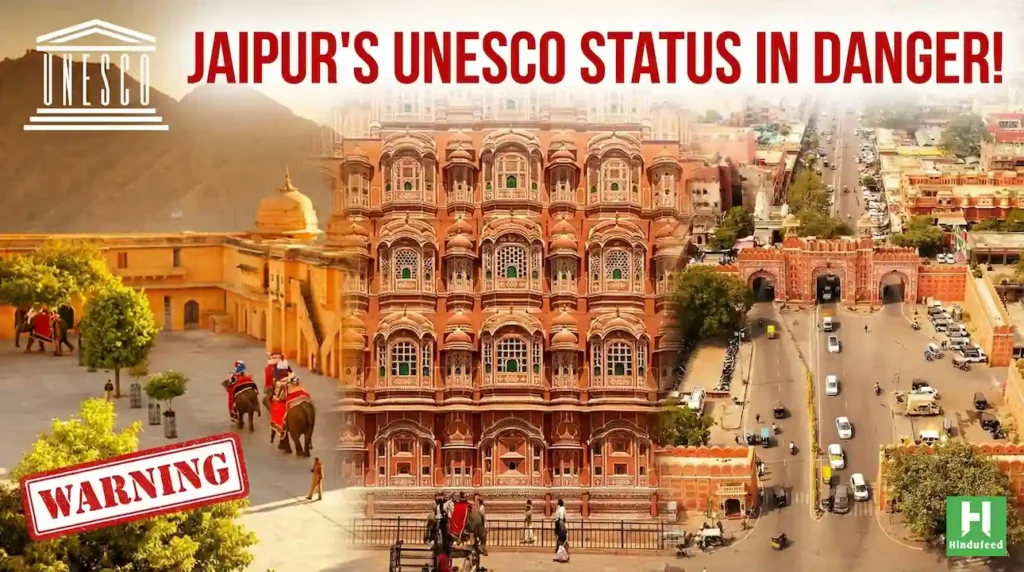
The Pink City of Jaipur, one of India’s most celebrated urban architectural marvels is currently standing at a precarious crossroads. As of early 2026, the UNESCO World Heritage Centre has continued its increased scrutiny of the Walled City, warning that its prestigious World Heritage status, which was granted in 2019 could be at risk if very urgent corrective measures are not taken.
UNESCOs worries revolve around three problem areas: rampant encroachments, a decline in conservation standards, and a persistent lag in implementing a robust management framework.
The Core of the Crisis: Why UNESCO is Concerned
Since the inclusion of the site, Jaipur’s “Outstanding Universal Value” (OUV) has been challenged by the rapid urban development. The newest reports from UNESCO (2025-2026) have shown several warning signs:
1. Encroachments and Illegal Construction
The historic skyline of the Walled City is gradually being changed. Unauthorized multi-storey commercial complexes are replacing the old residential houses (havelis), and illegal shops have been established all along the historic city walls. These buildings are a breach of the Heritage Bylaws whose aim is to preserve the city’s 18th-century character.
2. Poor Conservation and “Cosmetic” Fixes
Local critics and international observers agree that the conservation work is mostly superficial. Although the government periodically spruces up the landmark “Jaipur Pink” limewash on the outside of the buildings, the problem of the crumbling structures of many heritage buildings that have not been addressed continues to be there.
- “Bulldozer” Controversy: In 2025, leaks of the demolishing several heritage listed buildings under the pretense of “unsafe structures” came out where there were no proper Heritage Impact Assessments (HIA).
- Degrading Havelis: According to the official figures, the historic havelis number has decreased drastically from nearly 1200 in 1991 to less than 800 today.
3. Inadequate Management and Governance
The Special Area Heritage Development Plan (SAHDP), a compulsory document for a UNESCO inscription has been postponed for quite a few years. Even if the Rajasthan government has recently announced the implementation deadline as March 31, 2026, the postponement has given a free hand to the unregulated development for almost seven years.
What Happens Next? The “Danger List” Threat
The Rajasthan government has to give UNESCO a report by December 1, 2026. This report is about how they’re taking care of things. If the report is not good enough UNESCO may send send a “Reactive Monitoring Mission” to conduct an on-ground audit.
The “Danger List”: If the Rajasthan government does not do a job of taking care of things Jaipur might be put on the List of World Heritage in Danger. This is a final warning before a site is stripped of its status like Liverpool’s Maritime Mercantile City in 2021.
We will know what happens to Jaipur in 2027. The final verdict on Jaipur’s status is expected to be a major agenda item at the 49th Session of the World Heritage Committee in 2027.
The Government’s Response: A ₹100 Crore Lifeline
The Rajasthan government is trying to fix things. They said they will spend ₹100 crore to make things better. Here are some things they will do thar includes Standardization, Heritage Cell Revitalization & Infrastructure Upgrades:
- They will remove cables that are just hanging around and make sure all the signs in the markets look the same.
- They will make the local heritage team stronger, by adding people who know about taking care of things and planning cities.
- They will fix the sewage and drainage systems in the Walled City so the old buildings do not get damaged by water.
The World Heritage tag is more than an honour for Jaipur; it helps the city’s tourism a lot. If Jaipur loses this tag it will be bad for India’s reputation and might also mean less money from international funding and tourism.
To keep Jaipur as a city with a history we need to do more than just make it look pretty. We need rules that help modern businesses work well with preserving the city feel that is 300 years old. We have to make sure that new businesses and old traditions work together. This way Jaipur can stay an historic city. The city of Jaipur has a 300-year- soul that we need to preserve.


