












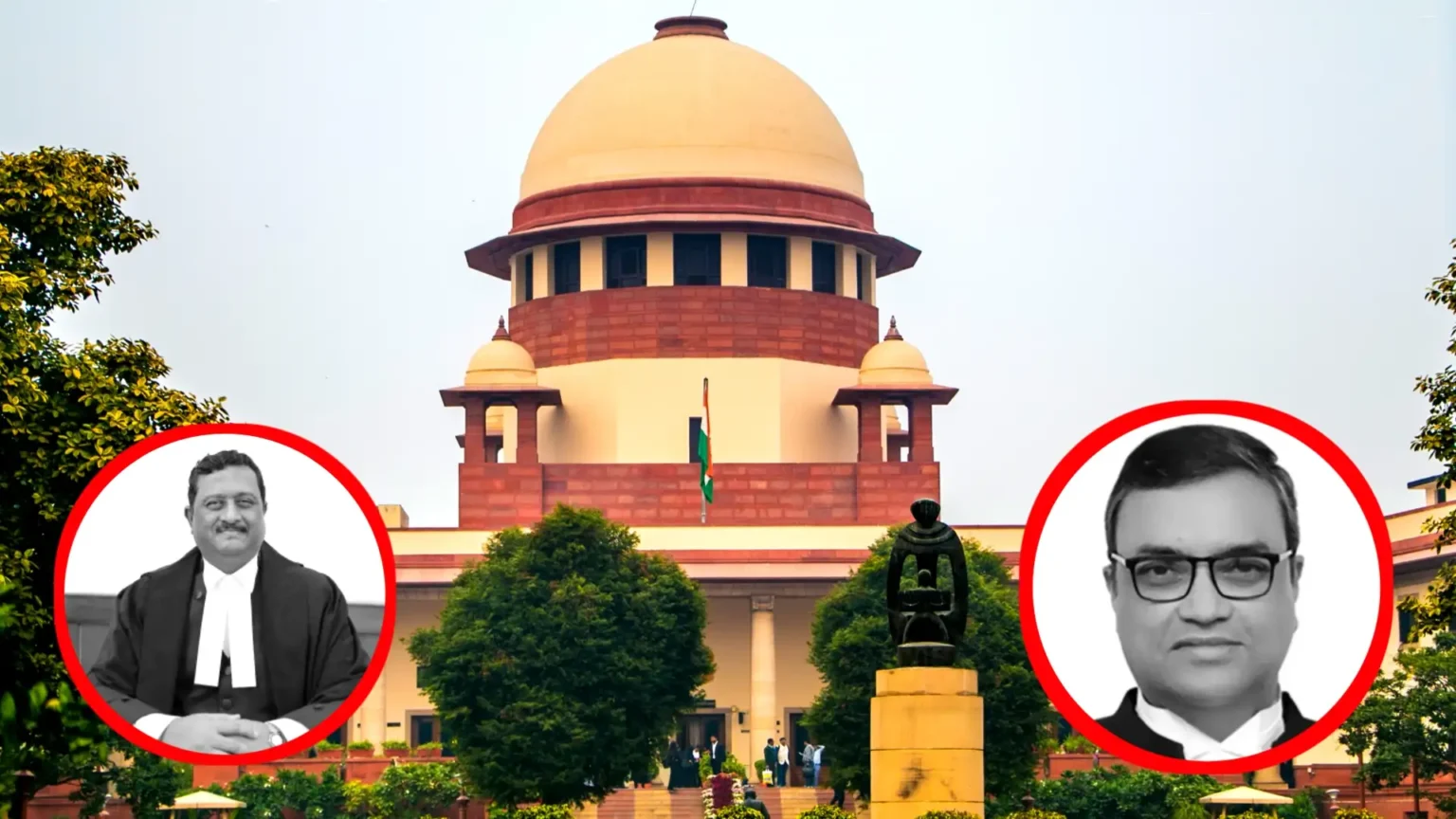
The Supreme Court has released Pardeep Kumar on bail after he spent close to two years behind bars without his trial even starting, declaring that keeping someone locked up indefinitely without trial essentially constitutes punishment.
A bench comprising Justice Dipankar Datta and Justice Prasanna B Varale overturned the Punjab and Haryana High Court’s July 11, 2025 decision that had refused bail to Kumar. “Almost two years have passed since the appellant was arrested without trial having commenced and conclusion thereof nowhere being in sight. Incarceration without trial amounts to punishment,” the Court stated.
Kumar was picked up on April 13, 2024, facing charges including extortion, attempt to murder, criminal intimidation and criminal conspiracy, alongside violations under the Arms Act. The prosecution lined up 23 witnesses but hasn’t examined a single one yet, the Court noted. With the trial nowhere close to beginning and likely to drag on once it does start, the bench concluded that keeping Kumar detained any longer served no purpose.
Taking everything into account, the judges set aside the High Court’s order and directed Kumar’s release on bail, contingent on him furnishing bail bonds and meeting conditions laid down by the trial court.
The apex court has been flagging the undertrial prisoner crisis repeatedly. Back in 2024, when granting bail to former Tamil Nadu Minister Senthil Balaji, it ruled that stricter bail provisions in tough laws like PMLA, UAPA, and NDPS Act cannot become instruments for indefinite incarceration without trial.
Come July 2025, the Court called out delays in NIA trials, warning that if the State doesn’t build adequate infrastructure for speedy trials, courts will have no choice but to grant bail to undertrials. “For how long suspects can be kept in indefinite custody?” the bench had asked pointedly.
The Supreme Court has also tackled delays in deciding bail applications themselves. Last year, it mandated that bail petitions should typically be decided within two months, noting that prolonged pendency of such applications erodes personal liberty. In another matter, the Court came down hard on delays in deciding bail pleas, emphasizing that courts must show sensitivity in liberty matters, especially when bail hearings themselves languish for extended periods.
In February 2025, the Court observed that an accused spending six to seven years in jail as an undertrial before final judgment amounts to violating the right to speedy trial guaranteed under Article 21.
Just earlier this month, the Court highlighted “inexplicable and huge delay” in Maharashtra trials, pointing out that repeated trial delays remain a pressing concern.
But the Court has also drawn boundaries around this principle. This January, while rejecting bail pleas of Umar Khalid and Sharjeel Imam in the Delhi riots larger conspiracy case, it held that trial delay isn’t a “trump card” for automatic bail and must be weighed alongside the gravity of allegations.
Advocate Gaurav Goyal and Advocate Srija Choudhury represented the appellant. Advocate Abha Sharma, accompanied by Advocates Anupam Maurya and Praneet Das, appeared for the State of Punjab.
Case of Pardeep Kumar @ Banu v. State of Punjab: Understanding The Court’s Reasoning
The Supreme Court’s decision in Pardeep Kumar’s case reflects a growing judicial concern about India’s bulging undertrial population. With Kumar arrested in April 2024 and the prosecution yet to examine even one of its 23 listed witnesses by early 2026, the Court saw little justification for continued detention.
The bench’s observation that “incarceration without trial amounts to punishment” strikes at the heart of the undertrial crisis. Constitutionally, an accused is presumed innocent until proven guilty. Yet when someone spends years awaiting trial, they effectively serve a sentence before conviction—a fundamental violation of this principle.
The Court noted the prosecution’s proposal to examine 23 witnesses. In India’s overburdened criminal justice system, examining two dozen witnesses can take years. With none examined yet and no trial commencement in sight, Kumar faced the prospect of several more years behind bars before even knowing if he’d be convicted.
The Punjab and Haryana High Court had earlier refused bail, likely weighing the serious nature of charges—extortion, attempt to murder, criminal intimidation, conspiracy, and Arms Act violations. But the Supreme Court took a broader view, factoring in the actual time already served against the uncertainty of when trial would conclude.
This isn’t the first time the apex court has intervened on undertrial detention. The Senthil Balaji case in 2024 established crucial precedent. Balaji, arrested in a money laundering case under the stringent Prevention of Money Laundering Act, remained in custody for months. When granting him bail, the Supreme Court made clear that even laws designed to combat serious economic offences cannot become tools for indefinite pre-trial detention.
The PMLA, UAPA (Unlawful Activities Prevention Act), and NDPS (Narcotic Drugs and Psychotropic Substances) Act all contain restrictive bail provisions. These laws impose higher thresholds—requiring courts to be satisfied that the accused is not guilty and unlikely to commit further offences while on bail. The 2024 ruling clarified these stringent conditions cannot justify keeping someone locked up indefinitely without trial.
The July 2025 observations about NIA (National Investigation Agency) trials were particularly pointed. The NIA handles cases involving terrorism, national security threats, and other grave matters. Yet even in these sensitive cases, the Court emphasized that indefinite custody violates constitutional guarantees. The bench’s rhetorical question—”For how long suspects can be kept in indefinite custody?”—underscored judicial frustration with systemic delays.
The Court’s directive that bail applications should ordinarily be decided within two months addresses another systemic failure. Often, accused persons spend months or even years waiting for bail hearings, let alone decisions. This procedural delay compounds the substantive injustice of prolonged pre-trial detention.
The February 2025 observation about six to seven years of undertrial custody violating Article 21’s right to speedy trial connects to broader constitutional protections. Article 21 guarantees that no person shall be deprived of life or personal liberty except according to procedure established by law. The Supreme Court has interpreted this to include the right to speedy trial—meaning not just eventual trial, but trial within reasonable time.
When someone spends six or seven years awaiting trial, even if ultimately acquitted, they’ve already served what amounts to a substantial sentence. If convicted and given, say, a ten-year sentence, they’ve already served more than half before conviction. If acquitted, those years are simply lost—an irreversible deprivation of liberty.
The Maharashtra observation about “inexplicable and huge delay” reflects state-specific concerns. Maharashtra’s courts handle massive caseloads, and infrastructure limitations exacerbate delays. But the Court made clear that administrative challenges don’t excuse constitutional violations.
However, the Umar Khalid and Sharjeel Imam bail rejection demonstrates the Court recognizes limits. Both face charges related to the 2020 Delhi riots, accused of being part of a larger conspiracy. Despite significant time in custody, the Court held that the serious nature of allegations—involving communal violence that killed dozens—meant delay alone couldn’t automatically warrant bail.
This balance is crucial. The Court isn’t saying every undertrial must be released regardless of charges. Rather, it’s demanding that trial delay be weighed alongside allegation severity, evidence strength, and other factors. In Kumar’s case, with two years passed, no trial movement, and 23 witnesses still unexamined, continued detention became unjustifiable.
The legal representation in the case highlights how bail litigation works. Kumar’s advocates—Gaurav Goyal and Srija Choudhury—would have argued the prolonged detention, lack of trial progress, and constitutional violations. Punjab’s lawyers—Abha Sharma, Anupam Maurya, and Praneet Das—likely defended the High Court’s decision based on charge severity and potential witness tampering concerns.
The Supreme Court’s decision to grant bail subject to conditions is standard practice. Trial courts typically impose reporting requirements, travel restrictions, prohibitions on contacting witnesses, and bond amounts. These conditions aim to ensure the accused attends trial and doesn’t interfere with proceedings, balancing liberty with justice administration.
This case adds to mounting judicial pressure on India’s criminal justice system to address the undertrial crisis. According to National Crime Records Bureau data, hundreds of thousands of undertrials languish in Indian prisons, many for years without trial. Some eventually get acquitted after serving more time in custody than their potential sentence. Others plead guilty just to get out, even if innocent.
The Supreme Court’s repeated interventions signal that judicial patience with systemic delays is wearing thin. Courts are making clear that infrastructure limitations, witness availability issues, or prosecutorial delays cannot indefinitely justify pre-trial detention. The constitutional guarantee of speedy trial and personal liberty must mean something concrete, not just theoretical protections undermined by practical failures.
For Pardeep Kumar, the bail means freedom after nearly two years in custody. But the larger message extends far beyond one case—it’s a warning that India’s criminal justice system must find ways to expedite trials or face more bail grants based on delay alone.
Case Details: Criminal Appeal No. 1341/2026 Case Title: Pardeep Kumar @ Banu v. State of Punjab


