











How India Rewrote T20 History in the 2026 World Cup Final
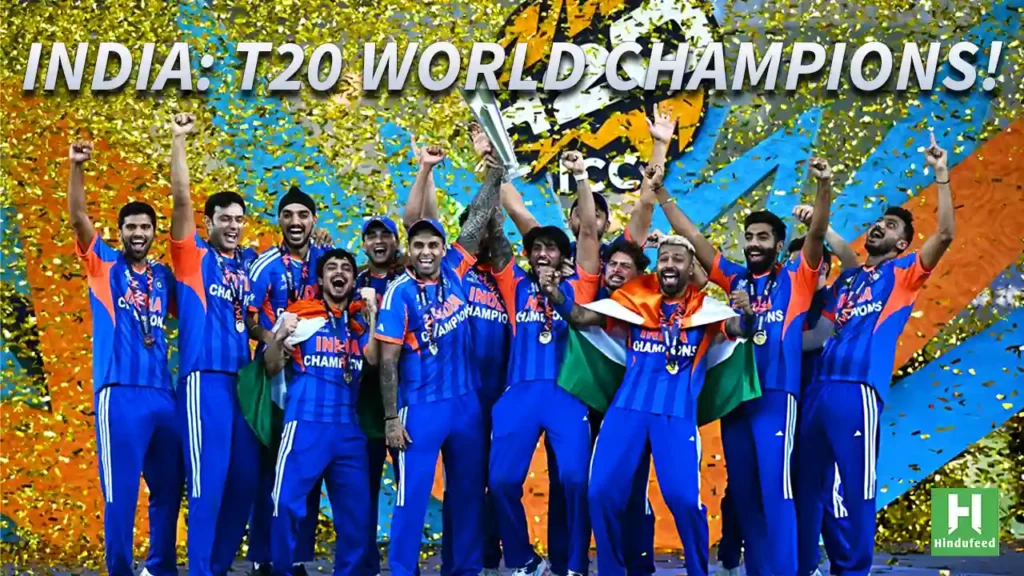
The echoes of “Vande Mataram” still resonate across the colossal Narendra Modi Stadium. On March 8, 2026, the Indian cricket team did not just win a trophy; they established a global dynasty. By defeating New Zealand by 96 runs, India achieved a historic feat: they became the first country to successfully defend the Men’s T20 World Cup title (2024, 2026) and the first to win it on home soil.
In a tournament marked by shifting power dynamics and the rise of associate nations, the final was a clear reminder of India’s absolute dominance in the shortest format of the game.
I. The Batting Blueprint: 255/5 and the End of the ‘Safe’ Total
When Mitchell Santner won the toss and chose to bowl, he likely relied on historical data from the 2023 ODI World Cup final. However, the 2026 pitch was entirely different—a hard, red-soil surface that offered true bounce and no respite for the bowlers.
The Abhishek-Samson Explosive Start
The opening pair of Abhishek Sharma and Sanju Samson did not just start the innings; they crushed New Zealand’s morale during the Powerplay. Abhishek Sharma, who had struggled for consistency throughout the group stages, chose the grandest stage to find his form. His 18-ball half-century was the fastest in T20 World Cup knockout history.
By the time Abhishek fell for a blistering 52 (21 balls), India had surged to 98/1 in just 7.1 overs. This foundation allowed the middle order to play with the “zero-fear” attitude that has become the hallmark of the Gautam Gambhir coaching era.
The Samson Masterclass
Sanju Samson’s 89 off 46 balls will go down as one of the most selfless innings in cricket history. He chose to prioritize the team’s run rate over a personal century, keeping the pace above 12 runs per over with a knock featuring eight towering sixes. His partnership of 105 runs with Ishan Kishan (54 off 25 balls) ensured that India crossed the 200-run mark by the 15th over.
Even though James Neesham took three quick wickets, Shivam Dube provided a thunderous finish, hitting 24 runs in the final over to propel India to a massive 255/5. This total effectively ended the contest before the second innings even began.
II. Defensive Perfection: The Bumrah-Axar Pincer Movement
Defending a target of 256 requires elite discipline. India’s bowling unit performed flawlessly under pressure. While New Zealand’s Tim Seifert (52) and Mitchell Santner (43) showed brief resistance, they were always chasing an impossible mathematical target.
- Bumrah’s Skill: Jasprit Bumrah proved again why he is the best all-format bowler of his generation. His figures of 4/15 were a masterclass in changing pace and executing yorkers. He didn’t just take wickets; he neutralized New Zealand’s hope.
- The Spin Trap: Axar Patel (3/27) and Varun Chakaravarthy exploited the grip offered under the stadium lights. Axar’s dismissal of Finn Allen in the first over set a defensive tone from which New Zealand never recovered.
III. The Sanju Samson Redemption Arc
The most compelling story of the 2026 World Cup was the rise of Sanju Samson. Entering the tournament as a backup option, Samson’s journey from the bench to Player of the Tournament is a testament to his resilience.
With 321 runs at an average of 80.25 and a strike rate of 199.37, he broke Virat Kohli’s 2014 record for the most runs by an Indian in a single T20 World Cup edition. His back-to-back 89s in the semi-final and final have finally silenced critics regarding his consistency on the world stage.
IV. Tournament Awards
The individual accolades for the 2026 edition reflect a tournament where skill levels were raised across the board.
| Award | Winner | Performance Highlights |
|---|---|---|
| Player of the Tournament | Sanju Samson (IND) | 321 Runs, 24 Sixes, 199.37 SR |
| Player of the Final | Jasprit Bumrah (IND) | 4/15 (3.75 Economy Rate) |
| Most Runs | Sahibzada Farhan (PAK) | 383 Runs (Incl. two centuries) |
| Most Wickets | Bumrah & Chakaravarthy | 14 Wickets Each (Joint Winners) |
V. Historical Significance: The Era of the ‘Blue Wall’
This victory cements India’s status as the only team to win the “Triple Crown” in the T20 era (2007, 2024, and 2026). Statistically, the 96-run margin is India’s largest-ever victory in a T20I final, eclipsing the tense 7-run win against South Africa two years prior.
For New Zealand, the heartbreak continues. This marks their 5th consecutive defeat in an ICC white-ball final since 2015, raising serious questions about their ability to win high-pressure “Big Game” scenarios.
Frequently Asked Questions (FAQ)
1. How much prize money did India win for the 2026 T20 World Cup?
India received $3 million (approx. ₹27.5 Crore) from the ICC as the winners’ prize. Additionally, the BCCI announced a ₹131 crore bonus for the players and support staff to commemorate the home victory.
2. Which records did Sanju Samson break in the 2026 World Cup?
Samson broke three major records:
- Highest individual score in a T20 World Cup final (89).
- Most runs by an Indian in a single edition (321).
- Most sixes in a T20 World Cup edition (24).
3. Why was the 2026 final total of 255/5 so significant?
It is the highest total ever recorded in an ICC T20 World Cup final. The previous record was 176/7, set by India in the 2024 final against South Africa.
Final Verdict
The 2026 World Cup win isn’t just about the stats; it’s about the evolution of Indian cricket. Under the leadership of Suryakumar Yadav and the tactical brilliance of Gautam Gambhir, India has moved away from conservative cricket to a high-octane, aggressive brand that leaves opponents with no room to breathe.
What was your favorite moment from the final? Was it Dube’s last-over carnage or Bumrah’s opening spell? Let us know in the comments!


