

There is something oddly satisfying about seeing Triptii Dimri at the top of Netflix India’s charts.
Not because success is new to her. The last few years have been full of it. But because Maa Behen feels like a return to a version of Triptii that many viewers thought Bollywood had started to overlook.
The dark comedy, which follows a mother and her two daughters as they find themselves entangled in a bizarre situation involving a dead body, has emerged as one of Netflix India’s biggest talking points. After climbing to the No. 1 spot on the platform, the film has sparked conversations that go far beyond its unusual premise. Before the magazine covers, before the endless paparazzi videos, before social media turned every appearance into a trending topic, there was Bulbbul.
Released on Netflix in 2020, the film introduced a lot of people to an actor who didn’t seem interested in playing safe. She wasn’t loud. She wasn’t trying to steal scenes. Yet by the end of the film, she was the person everyone was talking about.
Then came Qala. Again, it wasn’t a traditional commercial role. The film was quiet, emotional and deeply atmospheric. It didn’t rely on box-office numbers or celebrity hype. What it did was strengthen Triptii’s reputation as someone who could carry complicated emotions on screen without turning every scene into a performance showcase.
That version of Triptii built a loyal audience. Then Animal happened. Almost overnight, the conversation changed. Suddenly, it felt as if every discussion about Triptii had less to do with acting and more to do with popularity. News reports counted Instagram followers. Fan pages multiplied. Entertainment headlines focused on her growing celebrity status. None of that was necessarily bad, but something interesting happened along the way. People started talking about Triptii Dimri the star more than Triptii Dimri the actor.
That is why the reaction to Maa Behen feels different. The film has reached the top of Netflix India’s charts, and for days it remained among the platform’s most-watched titles in the country. If you spend a few minutes scrolling through viewer reactions, a pattern starts to emerge. People aren’t just celebrating the success of the film. They are talking about scenes. They are discussing characters. They are debating moments that stayed with them after watching.
For any actor, that is usually a good sign. The scene that keeps coming up is Jaya’s now widely discussed “one lakh rotis” breakdown.
It sounds like a joke when someone first describes it. A woman sits down and calculates how many rotis she has cooked during her married life. The number crosses one lakh. But the scene works because it isn’t really about food.
It is about what happens when years of effort become so routine that nobody notices them anymore.
Many viewers, especially women, immediately understood what the moment was trying to say. The frustration in the scene doesn’t come from making rotis. It comes from realizing that endless acts of care and labour have become invisible.
The internet has responded exactly the way it usually does when a film accidentally finds a nerve. Some people shared clips. Some shared personal stories. Some joked about it.
Others admitted that the scene was far more emotional than they expected.
The reactions have been varied, but they have all revolved around the same thing: recognition. People saw something familiar in Jaya. That may be one reason why the film has connected despite receiving mixed reactions in other areas.
Even viewers who were not completely convinced by the screenplay often singled out the performances for praise. Discussions around the film regularly circle back to the chemistry between Madhuri Dixit, Triptii Dimri and Dharna Durga.
The three women feel like a family in the way real families often do. They get irritated with each other. They misunderstand each other. They say things they probably shouldn’t. And yet when things go wrong, they close ranks immediately.
That dynamic gives the film much of its energy. The title itself has also generated conversation. For decades, “maa behen” has mostly been heard in the context of insults and street abuse. The film flips that idea around and places a mother and her daughters at the center of the story. What is usually used as an expression of anger becomes the identity of the people driving the narrative.
It is a small detail, but one that many viewers appreciated. What makes the success of Maa Behen particularly interesting, however, is what it says about Triptii’s career.
Actors often struggle when public perception changes too quickly. Sometimes an actor becomes so famous that the work itself starts disappearing behind the celebrity. Every new project is discussed through the lens of stardom rather than performance.
For a while, it looked as if that might happen to Triptii as well. Instead, Maa Behen seems to have brought the conversation back to where it began.
People are once again discussing acting choices. They are talking about scenes. They are debating characters.
They are quoting moments from the film rather than simply posting photographs from promotional events. For someone who first earned recognition through performance-driven Netflix originals, there is a certain irony in that.
Years after Bulbbul and Qala introduced her to streaming audiences, Triptii Dimri has returned to the same platform with a film that has become one of the biggest streaming successes in India this year.
The audience is much larger now. The spotlight is brighter. The expectations are higher.
But the reason people are paying attention feels surprisingly familiar. It is the same reason they noticed her in the first place. The acting.
Trending
- What Happens When AI Knows More About You Than Your Family Does?
- Supreme Court Says Husband Not Speaking to Wife 13 Day Does Not Amount to Cruelty, Sets Aside Conviction in Wife’s Suicide Case
- Facebook Goes Down Globally, Users Face Issues; Instagram Also Down for Some Users
- Holding Public Office Doesn’t Mean Losing Right to Privacy: Karnataka High Court
- Train Delayed by 6 Hours, But Man Fined ₹520 After Platform Ticket Expires at Kalyan Station
- Woman Awarded Rs 35,000 Compensation After KSRTC Bus Leaves Early, Causing Her to Miss Hospital Appointment
- Air India Ordered to Pay Rs 74,131 After Student Was Wrongly Charged for Extra Baggage
- Pakistan’s Expanding Satellite Surveillance Network Draws Attention Beyond the Space Sector

From Actor to Star and Back Again: How ‘Maa Behen’ Restored the Triptii Dimri We Missed after Bulbbul
 By Niyati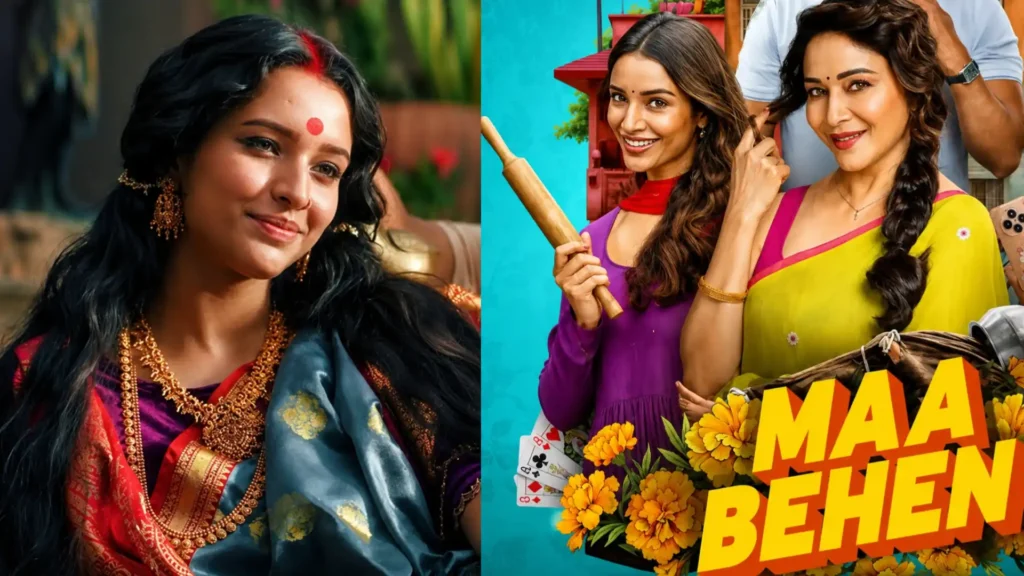

Niyati
Niyati is a digital content writer and current affairs commentator specializing in real-time news and viral internet culture. Known for her ability to transform complex daily headlines into smooth, highly engaging narratives, she focuses on bridging the gap between breaking news and reader-centric storytelling. Her editorial expertise spans human-interest journalism, behavioral psychology, and evolving social trends. Niyati is dedicated to delivering accurate, scannable, and deeply relatable articles that cut through the noise of the modern digital landscape.
Add A Comment