



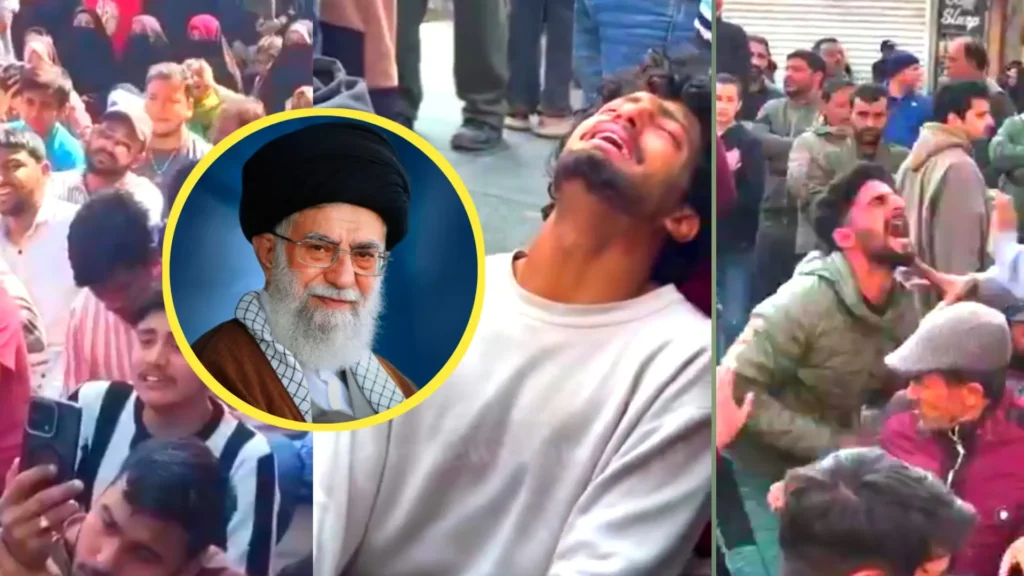
The passing of Iran’s Supreme Leader Ayatollah Ali Khamenei has ignited waves of grief and demonstrations among his followers in India, with massive rallies witnessed in Lucknow, Uttar Pradesh.
Early Sunday morning saw members from the Shia community assembling in substantial numbers across the state capital. The mourning march commenced from the centuries-old Chota Imambara located in Old Lucknow and wound through multiple prominent city localities. Demonstrators held aloft pictures of Khamenei while chanting slogans like “Khamenei Amar Rahein,” simultaneously expressing fierce opposition toward the United States and Israel.
Those addressing the demonstration conveyed profound anguish regarding Khamenei’s passing, characterizing it as a “dangerous development” and attributing it squarely to what they labeled American “terrorism and imperialism.” Several cautioned that circumstances might spiral into worldwide confrontation should hostilities continue intensifying.
Religious figures speaking to the assembled crowd portrayed Khamenei as an international personality who resisted oppression and championed the marginalized, regardless of their faith. They maintained that his passing would fuel inspiration among oppressed populations globally and demanded international initiatives pursuing justice.
From Kashmir, Lucknow, Bengaluru, and Karnataka Witnesses Shia Community Demonstrations
From Kashmir, Bengaluru to Lucknow, Shia Muslims protests condemning the killing of Iran’s Supreme Leader Ayatollah Ali Khamenei.
Inhabitants of Alipur village situated in Gauribidanur taluk within Chikkaballapur district of Karnataka found themselves engulfed in apprehension and sorrow after Shia Muslim community members organized a protest march alongside three days of mourning, denouncing Ayatollah Ali Khamenei’s death.
The demonstration is being orchestrated under the Anjuman-e-Jafaria Committee’s guidance. Positioned roughly 70 kilometers from Bengaluru, Alipur houses approximately 25,000 residents, with an estimated 90 percent identifying as Shia Muslims.
Syed Samar Kazmi, a prominent leader within India’s Shia community, informed ANI that Khamenei became a target for speaking out on Palestine. “He was eliminated solely because he spoke against the Palestinian killings while the rest of the world remained silent,” he stated.
Protests In Ladakh Region
Demonstrations were additionally documented in certain Ladakh areas, where Shia community members conducted peaceful mourning processions denouncing the strike.
Given the intense sentiments displayed on streets, substantial police forces were positioned along demonstration routes. Security forces escorted the procession, with authorities requesting calmness and self-control. Intelligence bureaus were similarly placed on heightened alert, advising citizens against believing rumors and to preserve communal peace.
Iranian State Media Confirms Supreme Leader’s Death
Per Iranian state media reports, Ayatollah Khamenei passed away following a significant attack purportedly executed by Israel and the United States, with confirmation arriving early Sunday (March 1, 2026). The announcement has profoundly affected Alipur’s inhabitants emotionally, many maintaining religious and cultural connections with Iran.
Throughout Karnataka, a three-day mourning period was declared in Alipur village near Bengaluru upon receiving news of Khamenei’s passing.
Government Coordinates Safety Measures
Officials stated the government maintains close coordination with the Union Ministry of External Affairs to guarantee the security and welfare of Jammu and Kashmir residents, including students presently in Iran.
A police representative informed PTI that senior officials had assessed the security landscape and instructed district police to vigilantly track developments and maintain order.
Security Arrangements Across Protest Sites
Law enforcement agencies deployed considerable personnel strength considering the emotionally charged atmosphere. Officers maintained visible presence throughout the mourning marches, ensuring demonstrations proceeded peacefully without incidents.
Intelligence networks activated monitoring systems to track potential flashpoints and circulated advisories urging residents to verify information before reacting. Community leaders were briefed about maintaining tranquility during the mourning period.
The three-day mourning announcement in Alipur reflects the deep cultural and religious bonds shared between India’s Shia population and Iran’s religious leadership. With nearly 90 percent of the village’s 25,000 residents belonging to the Shia faith, the emotional impact of Khamenei’s death resonates particularly strongly in this Karnataka locale.
Protesters in multiple cities emphasized Khamenei’s stance on Palestinian issues, with speakers highlighting his vocal opposition to what they termed injustices in the region. The demonstrations saw participants from various age groups, all united in expressing grief over the Iranian leader’s demise.
Security assessments conducted by district administrations across affected areas concluded that while emotions ran high, communities largely demonstrated restraint. Police officials commended the peaceful nature of the protests while maintaining preparedness for any contingencies.
The coordination between state governments and the Ministry of External Affairs underscores concerns about ensuring safety for Indian nationals in Iran during this period of heightened tensions. Specific attention is being directed toward students and residents currently in Iranian territory.
As the mourning period continues, authorities remain vigilant about maintaining communal harmony while respecting communities’ right to express grief. The situation is being monitored continuously, with regular assessments conducted to adjust security arrangements as needed.
Religious leaders participating in the demonstrations called for international attention to what they described as injustices leading to Khamenei’s death, framing it within broader geopolitical tensions involving the United States and Israel. Their speeches emphasized themes of resistance against oppression and solidarity with marginalized communities worldwide.
The protests across Lucknow, Bengaluru, and Ladakh represent the geographic spread of India’s Shia population and their emotional connection to Iran’s religious leadership. While demonstrations remained largely peaceful, the heavy security presence reflected authorities’ awareness of the sensitive nature of the situation.
