



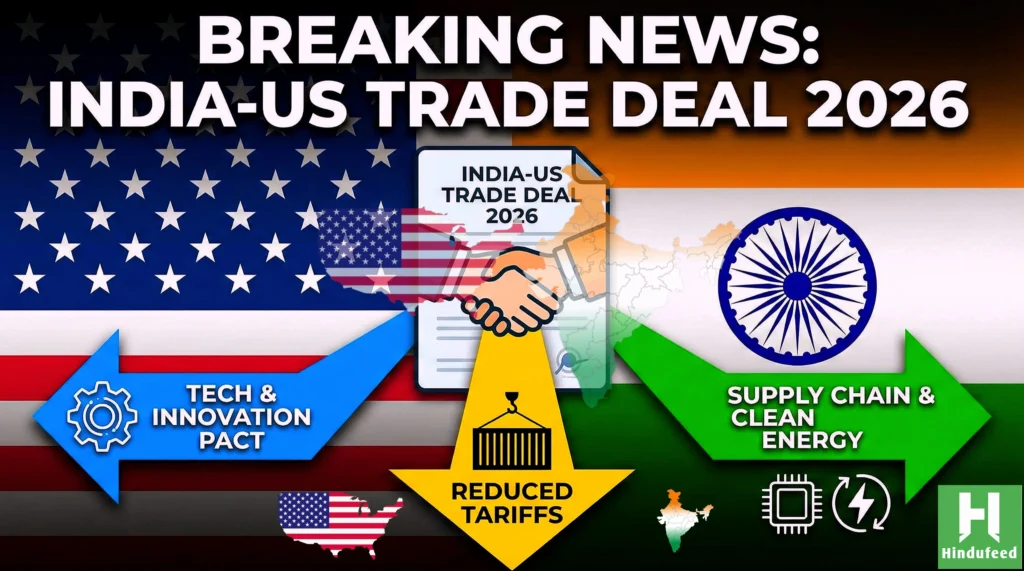
For a time people talked about the relationship between India and the United States as a lot of missed chances. These are two countries that share the same values but they could not seem to work together smoothly. Now that the 2026 Comprehensive Trade and Technology Partnership is announced that way of thinking is no longer true. The India and United States relationship is not just a bunch of trade rules and taxes on imported goods. The Comprehensive Trade and Technology Partnership between India and the United States is a change, in the way India and the United States do business with each other. By swapping old-school protectionism for a high-tech “innovation bridge,” both nations are betting that their shared future lies in co-creating the next generation of Al and energy, rather than just trading boxes on a ship. For the average person, from the factory floor in Tamil Nadu to the tech hubs of Silicon Valley, the world just got a lot more integrated-and a lot more interesting.
1. The Energy and Tech Swap ($100B Annual Import Target)
India has committed to a staggering $100 billion annual target for importing American energy-specifically LNG and green-hydrogen tech-alongside high-end electronics which significantly narrows the trade deficit and ties India’s energy security directly to U.S. production.
2. The 18% Tariff Ceiling
The U.S. has slashed tariffs on Indian-made electronics, textiles, and other key manufactured goods to a flat 18% ceiling. This move lowers the cost of “Made in India” products (like smartphones and clothing) in the America which is expected to trigger a massive hiring boom in Indian factories and manufacturing hubs as Indian goods become more price-competitive globally.
3. The iCET “Innovation Bridge” (DRDO-DIU Collaboration)
A direct R&D link now connects India’s DRDO with the U.S. Defense Innovation Unit (DIU) under the Critical and Emerging Technologies (iCET) framework which will allow to co-develop Al-driven surveillance and unmanned systems.
4. Tech-Expert Fast-Track Visas
A streamlined, “fast-track” visa process has been established specifically for Indian engineers and tech experts working on joint U.S.-India projects which facilitates the rapid movement of highly specialized talent across borders for critical tech projects.
The Final Verdict: A Future Shared or a Burden Borrowed?
When you look past all the announcements this deal is going to bring some real problems that India has to deal with. To see what is coming next we need to look at the details that will affect every person, in India from the people who work with technology in the cities to the farmers who work in the countryside.
The Debt Trap Fear. Critics worry that committing to $100 billion in annual imports could lead to a “debt trap,” making India too reliant on America for its basic energy needs.
Loss of Choice: Deeply linking our military and civil technology via the “Innovation Bridge” might make it harder for India to make its own independent foreign policy decisions in the future. The Visa vs. The Veggie: While the deal makes it easier for Bengaluru techies to get visas, there is a serious fear that American tech giants will eventually demand access to India’s food markets in return.
The Farmer’s Risk: Opening our doors to subsidized US crops could devastate local farmers in the heartland who cannot compete with American industrial farming prices.
The “Silicon” Collision: We must ensure that our own rising tech cities and our traditional farming plains don’t end up competing for the government’s attention and resources.
In the end, the real challenge isn’t the paperwork; it’s making sure the 18% tariff win for a factory worker doesn’t come at the cost of a farmer’s survival. This partnership could be the engine that turns India into a global manufacturing giant, but only if we ensure the weight of these multi-billion dollar promises doesn’t become a burden for the next generation.
