



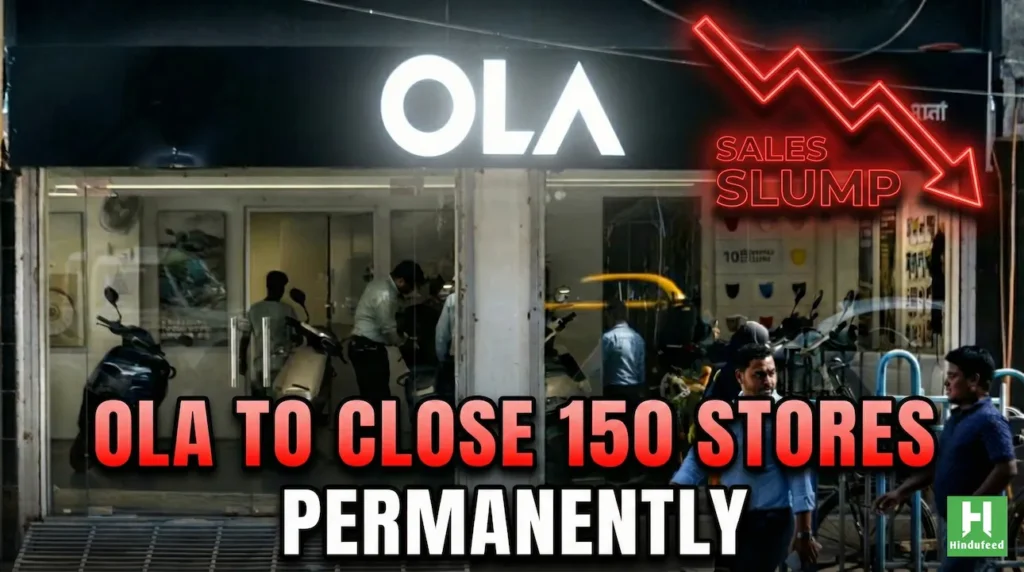
Once the undisputed leader of India’s electric two-wheeler market, Ola Electric has drastically shrunk its retail footprint. As per reports and shareholder communications, the company intends to close down another 150 stores by the end of March 2026, reducing the total number of stores to around 550.
This is a sharp deviation from the time when the company was aggressively expanding and claimed a network of nearly 4,000 stores across the country just over a year ago.
Market Share Collapse of Ola Electric
Closing the stores is one of the ways management sees the company going through a “structural reset” where operational efficiency is given priority over mere sales volume. Also, at the same time, the company has been going through one of the most difficult periods in its existence.
- The companys market share has drastically reduced from 26% a year ago to only 6.3% in January 2026. Preliminary figures for February indicate another decrease to about 4.2%, putting the company behind traditional manufacturers like TVS Motor Company and Bajaj Auto.
- For the quarter ended December 31, 2025, revenue from operations dropped a staggering 55% year-on-year to 470 crore.
- Vehicle deliveries fell 61% compared to the same period last year with only 32,680 units sold in the December quarter.
Service and Trust Issues
Industry analysts as well as the company’s CEO Bhavish Aggarwal himself have indicated that the main reason for the decline is the lack of service at the delivery stage. Even though Aggarwal is quite adamant that the product quality remains high in his recent talks he admits that “service network execution gaps” have largely hurt the image of the brand.
| Key Challenge | Impact on Business |
| Service Backlog | Overwhelmed service centers led to months-long repair delays and public customer outcry. |
| Legacy Competition | Established brands like TVS and Bajaj used their vast existing dealer networks to offer more reliable after-sales support. |
| Investor Panic | Shares of Ola Electric hit a record low of ₹27.07 this week, down over 80% from their 2024 peak. |
| Leadership Exodus | The company has seen high-profile exits, including its CFO and CTO, within the last quarter. |
The Road Ahead
In response to the negative trend, Ola Electric has initiated its #Hyperservice campaign, which is targeted to complete 80% of the service requests on the very day. Besides that, the company is going back full throttle on its “vertical integration” strategy. One of the steps is the commercial launch of its Bharat Cell (4680 battery cells), which is expected to lower the production costs and help achieve the break-even point.
On the other hand, drastic cuts in the number of stores point to a lean—and maybe also a humbled—future for the EV giant. Withdrawing from a capital-heavy direct-to-consumer model in the regions with low volumes, Ola is trying to fix the cash burn situation before the runway ends.
