



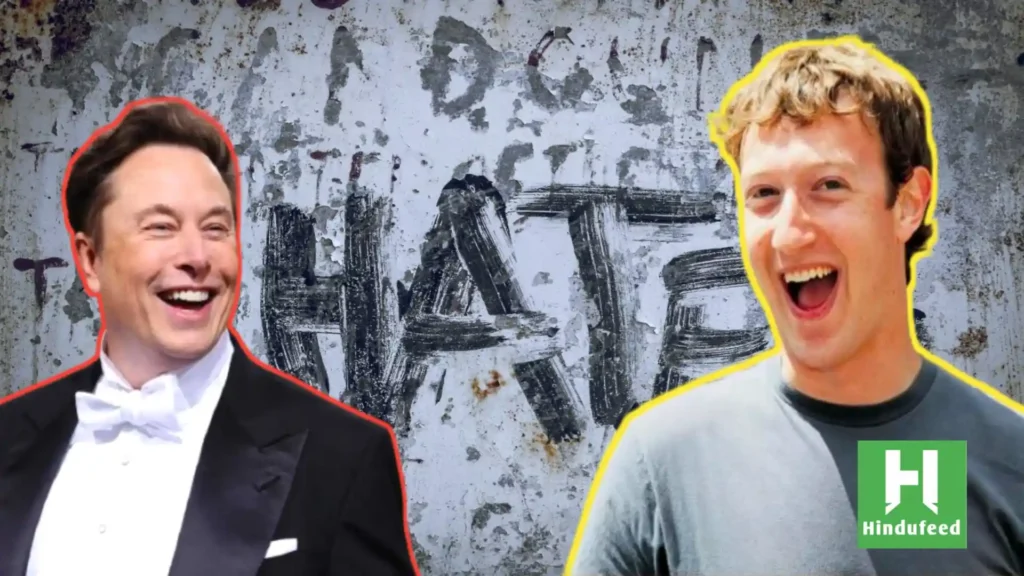
The internet was once imagined as a space that would connect societies and make communication more open . For many Indians today , however online platforms increasingly feel like spaces where identity itself becomes a trigger for outrage , rather for numerous Indians for both within the country and across the country it has widely become a domain where identities build itself and it turns into a trigger point of rage . In late 2024 and early 2025, a pattern became difficult to ignore, waves of anti-Indian content getting viral on platforms like X . During periods of geopolitical tension , the shift becomes especially visible . Following the deterioration of India Canada relations in late 2023 and continuing debates into 2024, social media feeds were flooded with clips, memes ,and hashtags targeting Indians, many of them spreading faster than factual reporting or nuance. What appears at first to be random outrage often follows a predictable pattern. Posts that provoke anger or identity based reactions tend to travel faster online especially on enhancement driven platforms. Overtime , the spread of hostility begins to look less accidental and more like part of a system that rewards visibility over accuracy. Outrage travels faster than context online. (Reuters, digital hate trends).
https://corp.oup.com/news/the-oxford-word-of-the-year-2025-is-rage-bait/
The Mindset and A Business Model Behind the Noise
To understand this enhancement, attention has to shift from the content itself to the systems promoting it . Social media platforms are not neutral public ground, they are advertising based businesses. Their primary intention is to maximize users attention, because attention and engagement to a particular post or a reel generates great revenue . Every extra second a user spends scrolling, reacting , engaging or arguing is minutely monetized through ads and data .
This is where emotion becomes profitable. Content that triggers anger or rage tends to keep people engaged for a longer period of time than neutral or basic information. It attracts controversy and disputes between people in comments and each individual interactions feeding the algorithms. In such an environment high conflict, emotionally charged, or divisive stories are not random or accidental errors in public discourse, Instead, they become useful tools for attracting attention and keeping users engaged. A researchers study’s platform dynamics have noted, engagement based ranking systems tend to reward content that enables to generate strong reactions, even when the reactions are negative most of the time. (ScienceDirect, engagement based ranking study)
https://doi.org/10.1016/j.jpubeco.2026.105589
The Mechanics Of Moral Contagion
Researchers describe this phenomenon as Moral Contagion; the tendency of getting emotionally charged , moral based content to spread more widely than neutral content. A study highlighted by The Decision Lab found that posts containing moral and emotional language are slightly more likely to be shared, with emotionally charged language significantly increasing the likelihood of shares and reactions.
In practical terms, this indicates that a post expresses rage , especially against an identifiable group that has built in advantage. It spreads widely, and reaches in the most part of the audience, and that creates trigger and engagement. For Indian user’s, this translates into a recurring cycle where stereotypes and hostile narratives gain traction not despite their tone , but because of it . The system does not distinguish between constructive criticism and targeted hostility, it tends to amplify whichever keeps people engaged The longest. ( The Decision Lab, moral Contagion research).
https://thedecisionlab.com/insights/society/social-media-and-moral-outrage
How Algorithms Turn Reaction into Reach
Overall platforms available in the market rely on algorithmic feeds rather than chronological timelines. Users are shown what the system predicts will keep them engaged, not what was posted most recently. This creates a collection of feedback loops.
- A provocative post appears
- It triggers strong reactions
- Engagement spikes
- The algorithm pushes it further
- New audiences react, often More intensely
Overtime, nuances often get pushed aside. Balanced or contextual content struggles to compete with emotionally charged narratives. Studies examining online vitality have consistently shown that false or sensational content spreads faster than factual or reporting, largely because it provokes stronger emotional responses (MIT Media Lab , false news study)
https://news.mit.edu/2018/study-twitter-false-news-travels-faster-true-stories-0308
The X Factor, Visibility for a Price
On X , these dynamics have taken on an additional later. A report by the Centre for the Study of Organized Hate ( CSOH) titled Anti Indian Hate on X pointed to a structural shift visibility can now be influenced not just by engagement, but by payment. Accounts subscribed to premium services often prioritised in replies and feeds.
According to the report, a significant portion of accounts posting anti Indian content during key global events were verified subscribers . This effectively creates a pay to amplify environment, where those who are interested in increasing the reach of their content regardless of its nature. Narratives rise around stereotypes or xenophobic tropes gain disproportionate visibility, not because they represent majority opinion, but because they are both engaging and algorithmically favored ( CSOH report on X hate trends)
https://www.csohate.org/wp-content/uploads/2025/01/Anti-Indian-Hate-on-X.pdf
Why Anti India Narratives Travel So Fast
The pattern has appeared repeatedly across different global conversations. During debates around H – 1B visas in the United States, Indian tech workers were frequently reduced to stealers or as symbols of outsourcing. On X, posts mocking Indian accents, workplaces, or hygiene often gained millions of impressions within hour’s especially when tied to broader immigration debates.
India’s massive online population gives any India related topic the potential to spread quickly. In it even a small fraction of users interacting with a post can generate significant momentum.
Geopolitics adds additional later . India’s position in global affairs whether through economic growth, diplomatic tensions, or migration debates makes it a frequent subject of international discussion. When these topics intersect with identity, they often become emotionally charged.
Similar cycles have emerged around tourism as well. In several cases over the past year, misleading or out of context clips claiming to show ‘Indian tourists behaving badly abroad’ circulated widely before verification caught up. By then , the outrage had already reached millions of users.
Diaspora dynamics further enlarged this. Indians living abroad often engaging in activities such as content , something defending, sometimes critiquing but always increasing visibility. Partially al lining coordinated networks ranging from troll groups to automated bot can artificially boost early engagement, pushing certain narratives into trending spaces. Research on information diffusion has shown that coordinated amplification can significantly distort what appears popular online ( Oxford Internet Institute, computational propaganda) .
https://www.oii.ox.ac.uk/research/projects/computational-propaganda/
Experimental Evidence, What Happens When the Algorithm Steps Back.
The influence of algorithms becomes even clearer when they are removed . In a large scale study conducted by the researchers Aarushi Kalra in 2025, users were shown a non personalised feed instead of the usual engagement driven one. The results were striking exposure to toxic content dropped by 27 percent.
However, it faced a trade off . Overall user engagement fell sharply. People started spending less time on the platform , shared and interacted less , and returned less frequently. This sported a tension: leaving an impact like reducing harmful content often links reducing the very Engagement that platforms depend on for revenue. In other words, it is healthier for revenue . In other words, healthier discourse may come at a financial cost ( Hate in the Time of Algorithms, 2025 study ).
https://arxiv.org/abs/2503.06244
Weak Moderation and Structural Gaps
In many cases , corrections simply do not travel as far as the original outrage. By the time context appears , the algorithm has already moved on .
Content Moderation remains inconsistent across all over platforms. While policies against hate speech exist, enforcement varies widely. Scale is one challenge as billions of posts are generated daily in a large number of scales . But language driven diversity and cultural nuance complicate matters further.
Scroll through the replies under almost any viral India related post during a global controversy and the pattern becomes familiar quickly mockery , pile one , and engagement farming layered together in real time.
In India’s case, many harmful misleading content can emerge in multiple languages, often using coded language, expressions and signs that evaluate automated detection . Reports from civil society organisations have repeatedly been delayed in removing flagged content, allowing it to continue spreading widely in audiences after being reported.
This created inconsistency gives rise to perception and often receives a reality of selective enforcement. Users pushing extreme narratives face limited consequences, reinforcing the cycle of amplification ( drishti IAS analysis on hate speech regulation ).
https://www.drishtiias.com/daily-updates/daily-news-analysis/hate-speech-in-india-2
From Screens to Streets , Real World Impact
Online Narratives and perceptions do not stay limited to digital space only, their effects spill out widely in the real world action and recreation perceptions. Data from groups like the AAPI Equality Alliance indicates that a large share of anti Asian incidents in recent years has targeted South Asians , with online rhetoric often preceding offline hostility.
When stereotypes are repeated and expand at scale, they begin to shape how communities are represented . For Indian professionals abroad particularly those on work visas this can translate into suspicion, resentment, or exclusion. The digital economy, in this sense , does not just reflect bias, it can actively intensify it (AAPI Equality Alliance report)
The Psychological Toll of Constant Exposure
Contact exposure to hostile content affects both individuals and communities. Constant exposure to such content one’s mind gets attracted towards it and slowly makes it feel relatable and the mind continues being in that negative emotion for long and eventually our emotions and thinking starts getting affected. Behavioral research suggests that online environments can become more aggressive then offline interactions, partly because anonymity reduces accountability.
What makes these narratives particularly effective online is that they rarely appear as direct hate speech . More often, they arrive disguised as jokes memes, sarcasm or dark humour formats that travel quickly because they allow hostility to feel socially acceptable.
For Indian user’s, repeated encounters with negative narratives can give a hint of sense of being targeted. For global audience’s, algorithmically presenting content can distort perceptions , presenting an incomplete or exaggerated impression of the country.
Echo chambers deepen this divide. As algorithms learn user interest and preferences, they begin to show the same interest rate content, reinforcing existing beliefs and limiting exposure of alternative viewpoints . Overall , this can normalise polarisation as the default mode of discourse ( Nature Human Behaviour, online hostility study).
https://www.nature.com/articles/s41562-026-02432-5
Regulation, Resistance, and the Limits of Control
Governments, including Indians, have attempted to respond through regulation. The Information Technology Rules requires faster pull down of unlawful content and greater accountability from platforms. These have been then named as for transparency in how algorithms work .
Yet regulation is a blunt instrument. Too little intervention allows harmful content to flourish, too much risks restricting legitimate expression. Platforms, meanwhile, continue to walk in tightrope between compliance, publish pressure, and profitability.
The deeper issue remains unresolved, as long as engagement is the primary metric, the system will go on to favour content that emerges reaction over content that informs. ( Government of India IT Rules Overview).
https://www.meity.gov.in/static/uploads/2026/02/550681ab908f8afb135b0ad42816a1c9.pdf
Who Benefits from the Outrage?
The amplification of anti Indian narratives is not simply the result of individual bias or isolated incidents. It is embedded in the architecture of the platforms themselves. Algorithms designed to maximize engagement and interaction elevate the most emotionally charged content, and in many cases, that content is divisive .
This does not mean any platforms intentionally promote hate. But it doesn’t state that their incentives are aligned in a way that allows such content to thrive .
For users, this raises an uncomfortable possibility, every single click , share , or angry reply feeds the system that sets these narratives. The disturbing part is how ordinary the cycle has started to feel.
If the economics of attention remains unresolved, the cycle is unlikely to break. The real question is no longer where social media reflects public opinion, but how strongly it shapes it.
