












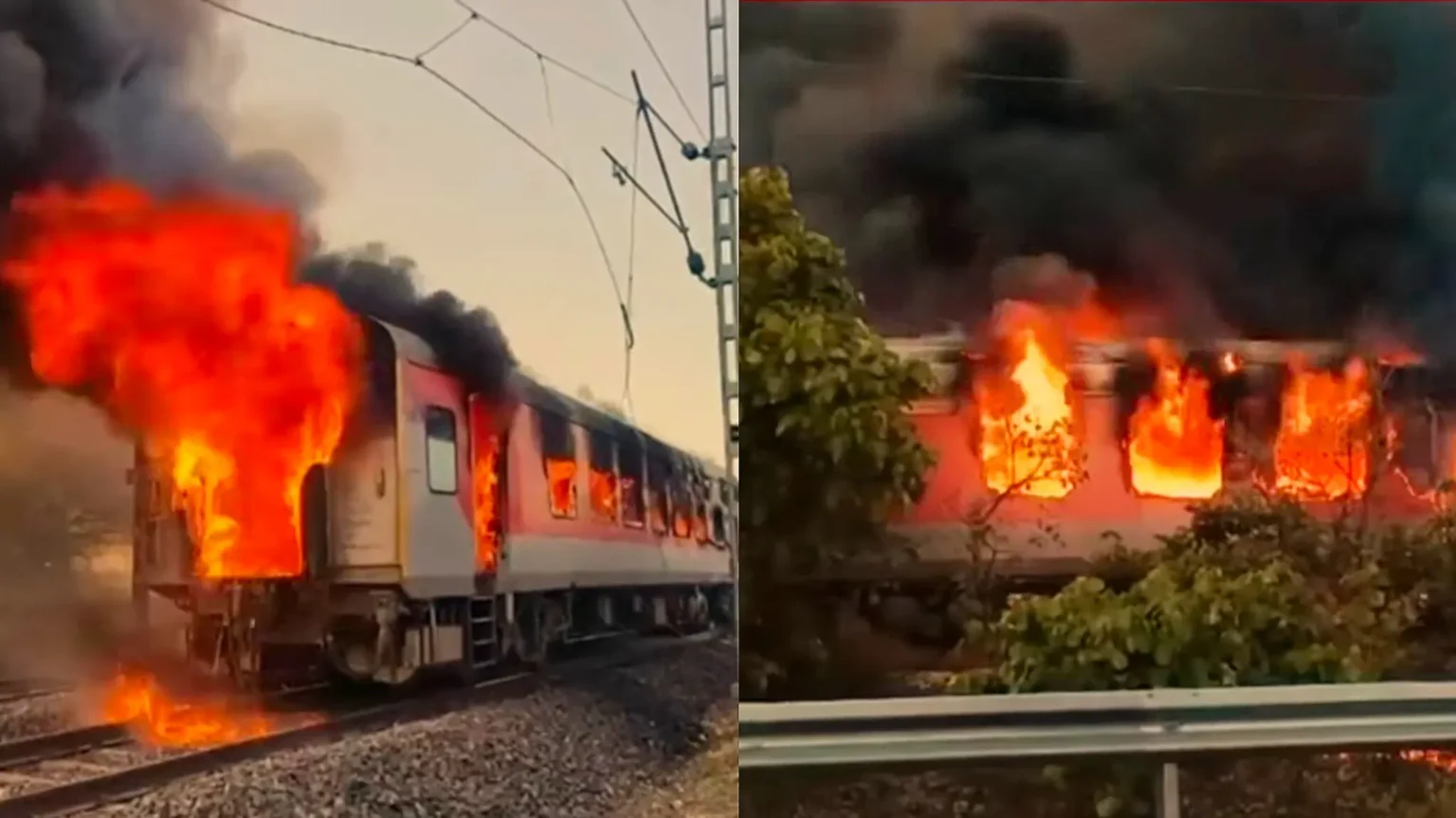
A fire that broke out in the B-1 coach of the Thiruvananthapuram–Hazrat Nizamuddin Rajdhani Express train number 12431, near Madhya Pradesh’s Ratlam district on Sunday morning could have turned into a major railway tragedy. Instead, it became an example of how rapid coordination and timely evacuation helped prevent casualties on one of India’s busiest long-distance routes.
The incident took place around 5:15 am when the train was passing between Luni Richha and Vikramgarh Alot stations under the Kota railway division. According to railway officials, smoke was first noticed by train guard coming from an AC coach, following which emergency procedures were immediately initiated. The coach was detached from the train, the overhead power supply was cut off, and passengers were moved to safety before the fire spread further. There were 68 passengers in that B-1 coach and the fire also spread to the adjoining SLR coach (Seating-cum-Luggage Rake/Guard Van).
Officials confirmed that all passengers travelling in the affected coach were safely evacuated. No injuries or deaths were reported.
While railway fires are not entirely uncommon in India, incidents involving premium trains like the Rajdhani Express attract wider attention because these services are generally associated with higher maintenance standards and stricter operational monitoring. The Thiruvananthapuram Rajdhani is among the important long-distance trains connecting Kerala with the national capital, carrying passengers across several states on a route that remains heavily occupied throughout the year.
Initial reports suggest the fire may have been caused by a technical fault or short circuit, though railway authorities have not yet released an official confirmation regarding the exact cause. A detailed investigation has been ordered to determine how the blaze started inside the AC compartment.
The timing of the incident added to the challenge for railway staff. Since the fire broke out early in the morning, many passengers were asleep when smoke began entering parts of the coach. In air-conditioned coaches, where windows remain sealed, even small fires can quickly create panic due to smoke accumulation and limited visibility.
According to officials present at the site, onboard staff acted quickly after the emergency was reported. Railway personnel, local administration teams, and firefighters coordinated evacuation efforts while nearby train movement was temporarily regulated to ensure rescue operations were not affected.
Visuals from the scene later showed thick smoke rising from the isolated coach as firefighters worked to control the flames. Passengers standing at a distance with luggage and belongings could also be seen waiting near the tracks after being evacuated from the train.
What stands out in this incident is the speed of the response mechanism. In many railway accidents across the country, delays in communication or rescue often worsen the situation. In this case, however, the fire was identified early enough for railway authorities to separate the affected coach before the blaze spread to adjacent compartments.
That decision likely prevented a far more dangerous situation, especially considering the train was carrying hundreds of passengers over a long inter-state journey.
The incident has once again drawn attention to fire safety systems inside Indian trains, particularly in AC coaches where electrical equipment, charging points, air-conditioning units, and wiring systems operate continuously during long journeys. Railway experts have repeatedly stressed the need for regular inspection of electrical circuits and emergency response equipment, especially during peak summer travel periods when pressure on onboard systems increases.
Over the past few years, Indian Railways has introduced modern LHB coaches and improved fire detection mechanisms across several premium trains. Authorities have also conducted periodic safety audits aimed at reducing risks linked to electrical failures and inflammable materials inside coaches.
Despite these measures, occasional fire incidents continue to raise questions about maintenance consistency across such a vast railway network that transports millions of passengers daily.
Passengers travelling on long-distance trains often assume that emergencies are rare, especially on premium services. Sunday’s incident served as a reminder that preparedness and response remain just as important as technology upgrades.
Railway officials later arranged assistance for affected passengers and worked to restore normal movement on the route after the fire was brought under control. The remaining coaches of the train were reportedly moved ahead after safety clearance from authorities.
For now, the biggest relief remains the absence of casualties.
Had the fire spread further into adjoining compartments or remained unnoticed for longer, the situation could have become significantly more serious. Instead, the incident ended with passengers rescued safely and emergency teams managing to contain the damage in time.
As investigations continue, railway authorities are expected to examine both the technical cause of the fire and the effectiveness of the response systems that were activated during the emergency.


