







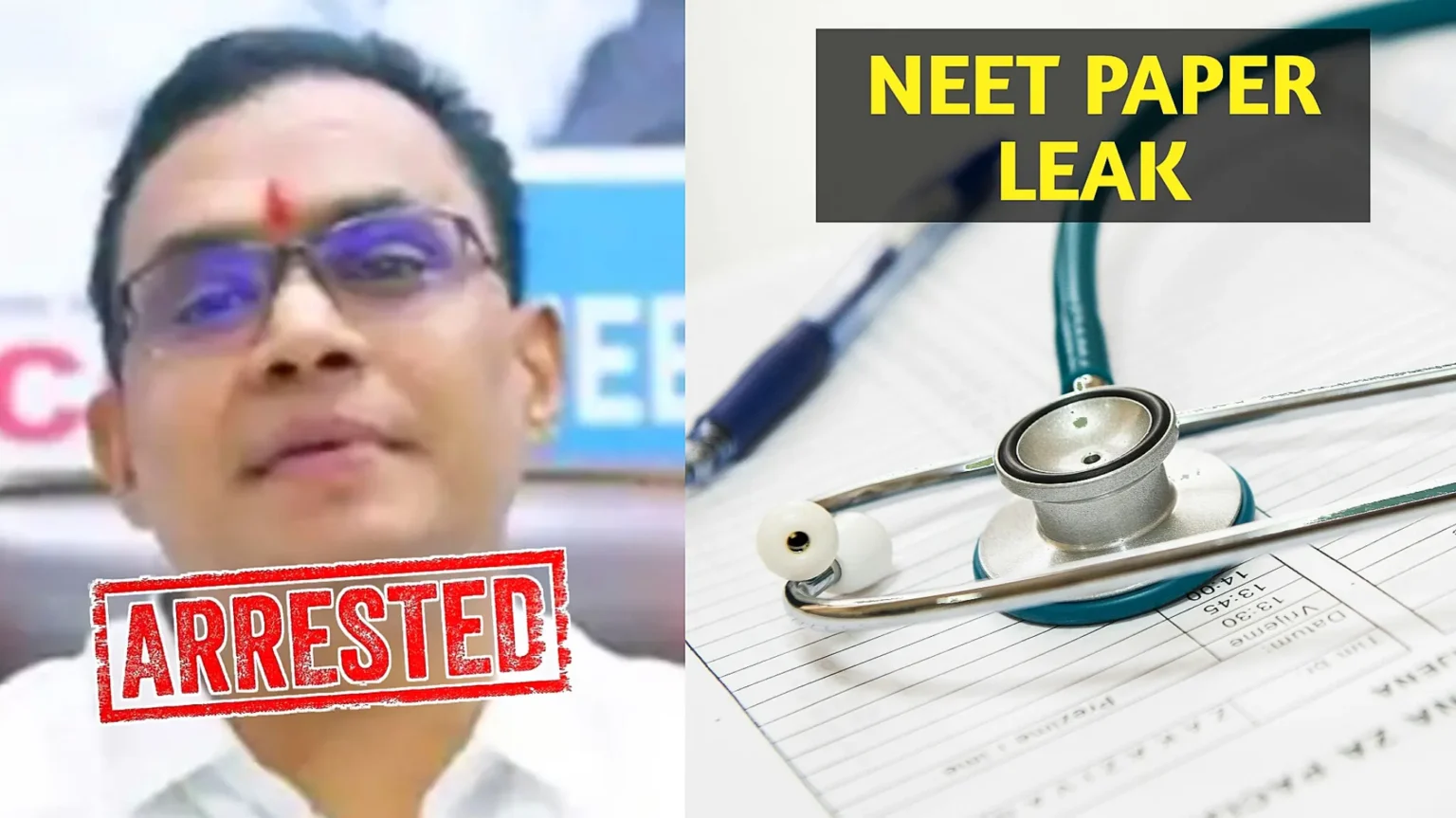
At around 6 am on Sunday, officers from the Central Bureau of Investigation arrived at RCC Classes (Renukai Career Centre) in Latur, one of the better-known NEET coaching institutes in the region. By evening, the agency had arrested chemistry teacher and institute founder Shivraj Raghunath Motegaonkar in connection with the alleged NEET-UG 2026 paper leak case.
The arrest made him the 10th accused in the investigation linked to the May 3 examination.
Inside Latur, the development spread quickly through WhatsApp groups of parents, hostel owners and students preparing for next year’s entrance tests. For many people in the city, the news was difficult to process because RCC was not an unknown coaching centre operating quietly on the margins. It was part of the mainstream NEET coaching ecosystem that dominates large parts of Latur’s education economy.
The CBI claims that leaked chemistry-related NEET material was recovered during searches and that investigators are examining similarities between certain “guess papers” and the actual exam paper. Officials are also studying videos and digital evidence connected to the institute.
One video in particular drew attention after it circulated online last week. In the clip, Motegaonkar was allegedly heard asking students how many questions from a mock test matched the real examination. Soon after the video spread, demands for a formal inquiry increased. Latur police had already begun preliminary verification before the case moved to the CBI.
In Maharashtra’s coaching circuit, the controversy has hit a sensitive nerve because Latur is not just another district city. For nearly three decades, it has marketed itself as a centre of academic discipline and competitive exam success.
Parents from districts such as Nanded, Beed, Hingoli and Parbhani routinely send students there after Class 10. Entire neighbourhoods in the city operate around the student economy. Hostel buildings, libraries, tiffin services, photocopy shops and private study rooms exist because thousands of teenagers arrive every year hoping to crack NEET or JEE.
The phrase “Latur Pattern” became popular during the 1990s when junior colleges in the city started producing consistently high board examination results. Strict timetables, repeated testing and intensive revision schedules became the model. But over time, the system changed.
School education and coaching gradually merged into one competitive structure focused almost entirely on entrance exams. Students often spend more time solving MCQs than attending regular classroom discussions. Coaching advertisements featuring toppers and AIR rankings became common across the city.
That pressure is visible everywhere during NEET season.
Students begin library sessions early in the morning. Coaching batches continue late into the night. Outside major institutes, tea stalls remain open past midnight because aspirants are still studying. In many families, preparing for NEET is treated less like normal education and more like a full-time project. Which is why leak allegations trigger immediate outrage.
Students who spend two or three years preparing for one exam see paper leaks as a direct attack on merit. Many parents also worry about the financial burden attached to competitive preparation. A serious NEET coaching setup in cities like Latur can cost families lakhs of rupees when hostel fees, tuition, food and test series are included. That frustration has now spilled into the public conversation after the CBI arrests.
Political protests were reported in parts of Maharashtra after Motegaonkar’s arrest, while social media platforms filled with arguments over whether coaching institutes have gained excessive influence over entrance examinations. The investigation itself is still developing.
Officials are trying to determine whether the alleged leak involved a larger organised network connecting exam handlers, intermediaries and coaching-linked individuals. So far, agencies have not publicly disclosed the complete chain through which the question paper was allegedly circulated before the exam.
At the same time, legal proceedings are ongoing, and the accused will have the opportunity to respond to the allegations in court. Still, the controversy has already damaged trust in the examination system.
The National Testing Agency has faced repeated criticism over exam management and security in recent years, particularly whenever irregularities surface in high-stakes tests. NEET, because of its scale, becomes especially vulnerable to controversy. Lakhs of students appear for the exam across hundreds of centres, making security and coordination extremely difficult. But the debate around Latur goes beyond one investigation file.
Several teachers in Maharashtra privately admit that the coaching industry has become far more commercial than it was two decades ago. Results are treated as marketing tools. Successful students appear on giant billboards. Institutes compete aggressively for admissions immediately after board results.
In that environment, reputation carries enormous financial value.
That is one reason why the arrest of a known chemistry teacher has shaken the coaching sector more deeply than earlier leak allegations involving anonymous middlemen.
For many people outside Maharashtra, Latur’s image was built around hard work and disciplined study culture. The city became proof that students from smaller districts could compete with metropolitan coaching centres through consistency and structured preparation.
Now the same city is being discussed nationally because of a paper leak investigation.
Whether the case ultimately reveals a wider organised racket or isolated misconduct will become clearer only after the investigation progresses further. But the incident has already forced uncomfortable questions about India’s entrance-exam culture, the commercial power of coaching institutes and the growing desperation surrounding medical admissions.
In Latur, meanwhile, students are back in classrooms preparing for the next cycle of exams even as the city’s most closely watched coaching scandal continues unfolding around them.