



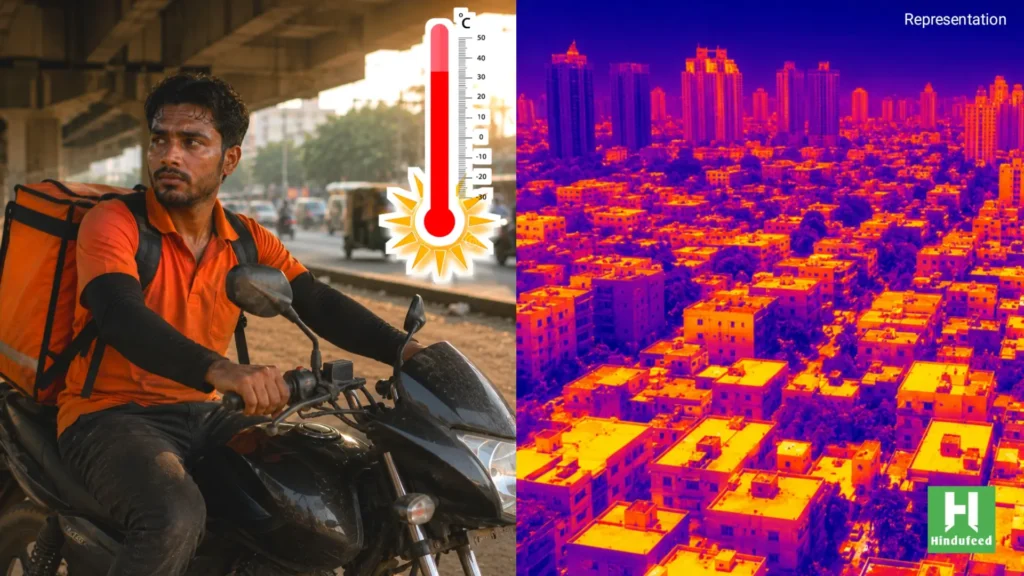
Now look. By 2 PM in many Indian cities, the heat changes the character completely. Metal railings at railway stations become difficult to touch, delivery riders stop under flyovers for shade, and streets that were crowded in the morning suddenly begin to empty. In Mumbai, even the evening breeze sometimes feels warm because concrete buildings continue releasing heat long after sunset.
A few years ago, people mostly treated heatwaves as seasonal discomfort. Now they are beginning to shape everyday life in more serious ways. Across India and much of the world, rising temperatures are affecting productivity, electricity demand, public health, and even the way cities are designed.
The heat is no longer just weather. It is becoming part of the economy.
When Heat Starts Reducing Productivity
Unlike floods or cyclones, heatwaves rarely leave dramatic visuals behind. There are no collapsed buildings or broken roads to photograph afterward. The damage happens quietly.
Construction workers take longer breaks because equipment becomes too hot to handle comfortably. Farmers in several states avoid working during peak afternoon hours. Delivery riders often wait under metro bridges or outside small tea stalls until temperatures become slightly bearable again.
At one roadside stall near Dadar station in Mumbai, customers now crowd around a single standing fan during late afternoons while the owner repeatedly pours water over the pavement to reduce the heat around the stop. It is a small scene, but it says a lot about how ordinary routines are changing.
Even indoor workers are affected. Offices with poor ventilation become exhausting by evening, and concentration drops faster than many employers realize. Researchers across several countries have warned that rising temperatures could lead to millions of lost working hours over the next decade.
For many families, the hardest part of summer is no longer the afternoon heat itself, it’s the electricity bill waiting at the end of the month.
Technology Is Moving Closer To The Body
Extreme heat is also changing wearable technology.
Cooling jackets, breathable fabrics and hydration monitoring devices are becoming more common among industrial workers, athletes, and delivery staff. Some companies are designing uniforms specifically for high-temperature conditions, especially in countries where outdoor labour remains unavoidable.
Cities now use AI-powered heat maps to identify urban heat islands-areas where temperatures become significantly higher because of dense concrete constructions, traffic, or a lack of trees. These systems combine satellite imagery with local temperature sensors to help governments decide where cooling shelters, shaded bus stops or green spaces are most urgently needed.
In Ahmedabad, where The Heat Action Plan (HAP) has received international attention in recent years, local authorities have increasingly focused on early warning systems and public awareness campaigns to reduce heat related deaths.
Cities Are Being Forced to Rethink Design
Modern cities were largely designed for speed, density and commercial expansion, not for prolonged extreme heat.
Glass covered office towers may look modern, but many trap enormous amounts of heat and depend heavily on continuous air conditioning. Walking near large commercial complexes during peak afternoon hours often feels noticeably hotter than nearby shaded streets.
As temperatures rise, architects are revisiting older ideas that traditional Indian construction understood long before modern cooling technology existed.
Older homes often used shaded courtyards, thick walls, high ceilings and natural cross ventilation to remain cooler during summer months. Many of those ideas are now returning in updated forms.
Ironically, the future of climate smart architecture may depend partly on rediscovering older methods that people once abandoned in the name of modernization.
Adapting to A Hotter Future
The Heatwave Economy is reshaping industries ranging from healthcare and construction to technology and real estate. What once felt like occasional extreme weather is slowly becoming part of normal urban life.
People are already adapting in small ways. Outdoor events are shifting towards evenings, schools are adjusting schedules during severe heat, and weather apps have become daily survival tools rather than casual conveniences.
Human beings adapt surprisingly quickly. The worrying part is how fast extreme heat itself is starting to feel ordinary.
The cities that succeed in the coming decades may not simply be the richest or most technologically advanced. They may be the ones that learn how to redesign daily life around a hotter world instead of continuing to treat heatwaves like temporary disruptions.
