



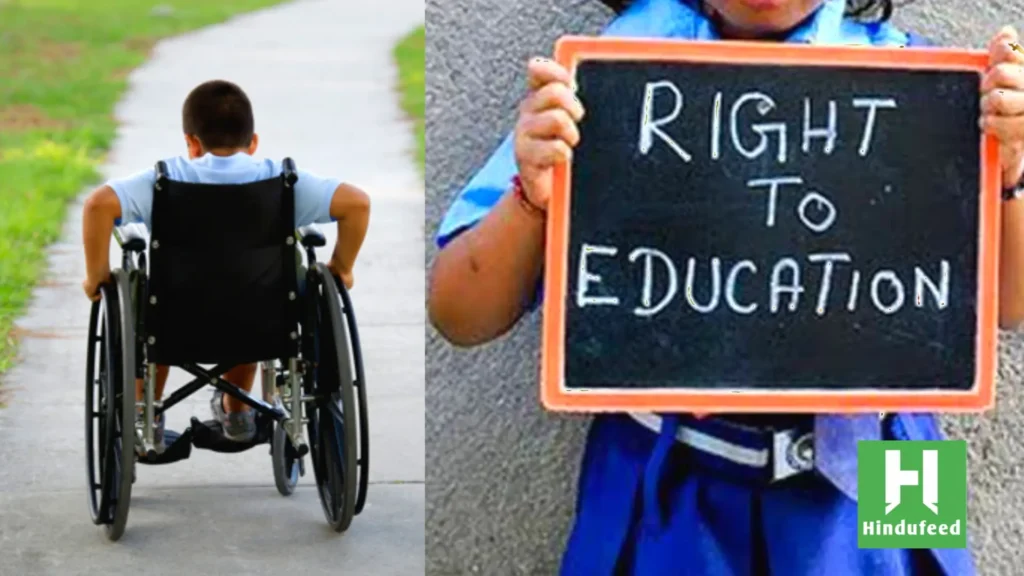
A Constitution promises rights to education to each and every child on paper, but for many children with disabilities, who face the real challenge at the school gate. When parents go for the admission, the schools come with the excuses like we don’t have facilities for them or either our sites are already full. Some also say that you should take your child to a special school.
Parents are mostly told that there are “no trained teachers available” and “the child would be better suited elsewhere”, “the environment is not appropriate for the child”. What sound like administrative issues to the school becomes a deeply personal rejection for families.
For a child, being denied for admission is not just about missing classes and education it is also about a right that has been taken away from the child, A child should have a right to study with his age of children and have all the access as they have; there should be no discrimination. It also gives a painful message to the children and as they grow up and start understanding things they often are trapped in questions like Am I not good enough? Why don’t people treat me equally?. This affects the child’s mental health, friendship, confidence, a sense of dignity every child deserves.
Inclusive education should not be seen as charity or extra responsibility. It is a basic right and an essential step toward building a more compassionate society. Schools that welcome children of all abilities do more than educate students; They teach acceptance, empathy and equality in the most meaningful way possible.
The Legal Landmark: Hope vs. Reality
Twelve years ago, the Delhi High Court delivered a verdict that was supposed to end the “infrastructure excuse” once and for all . It was a moment of profound hope for parents of the children with special needs (CWSN). The court was blunt; a school cannot close it’s gate just because it hasn’t updated its facilities for special education. Under the Article 21A of the constitution, education isn’t a favor; it’s a fundamental right.
As the 2026 academic session kicks off across the country, the reality on the ground feels like a backtrack. Despite the laws on the books and the high profile rulings in the archives , thousands of children with disabilities are still being met with a polite but firm no at the registration desk.
The Constitutional Mirage: Where Article 21A Hits a Wall
To understand why this gap exists, one must look at the paper shield that is Article 21A. Introduced to ensure free and compulsory education for all , it is the crown jewel of India’s educational reforms. But for parents of a child with Autism or Cerebral Palsy, Article 21A often feels distant from reality.
“They don’t say we won’t take him because he has a disability”, says Sunita , a mother residing in suburban Mumbai who has spent the last three months knocking on the door of ten different private schools for her seven year old son. “They say, ‘We would love to have him , but we won’t have the specialized staff’. He would be better off in a special school, it’s the same spirit every time. It’s a soft indirect rejection that leaves you nowhere to go”.
This indirect rejection is exactly what the 2014 High Court rulings sought to dismantle . The judiciary was clear, the onus is on the institute to adapt to the child, not the child to find a school that fits . By suggesting special school institutions are effectively practicing a form of educational apartheid, segregating children who have every legal right to be in a mainstream classroom.
The High Cost of Inclusion
If we talk about the school administrators privately, a different story will appear. It isn’t just about the ramp , says the principal of a reputed South Mumbai school. It’s about the shadow teacher, the individualized education plan (IEP), and the sensitivity training for the rest of the staff , The government mandates the intake, but there is zero financial or logistical support to help us implement it.
This is the missing link . The 2014 ruling placed the moral and legal burden on schools, but the state has failed to provide the infrastructure to support that burden. Special educators are in short supply, and the ones available are often overworked and underpaid. Without a government backed “Nodal Agency” to really help schools transition, implementation remains weak.
The Picture Ahead
If we are to move beyond the rhetoric of Article 21A, three things need to happen immediately:
- Independent Inclusion Audits: The Education Department must conduct surprise audits not just of school accounts, but of their “Inclusion Index” . How many CWSN are enrolled ? Do they have access to special educators?
- Centralized Resource Pools : Smaller schools may not be able to afford a full time special educator. The government should create “cluster hubs” where one specialist serves 3 to 4 neighborhood schools .
- Reducing Dependence on “Special Schools”: Special school should be the exception, not the rule. Mainstream school’s must be held legally accountable for every CWSN application they turn away.
As another admission season comes, thousands of children are being told that the classroom isn’t for them. We have the Constitution on our side and a decade of court rulings on our side. What remains missing is consistent political and institutional commitment. The society that accepts disabled children , and treats them equally rather than putting a restriction or indirectly denying them.
Article 21A promised a seat for every child. It’s time we made sure that seat actually exists and gets utilised for the betterment of the Children.
