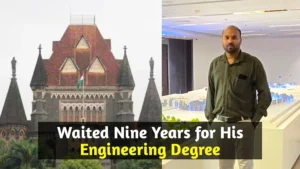







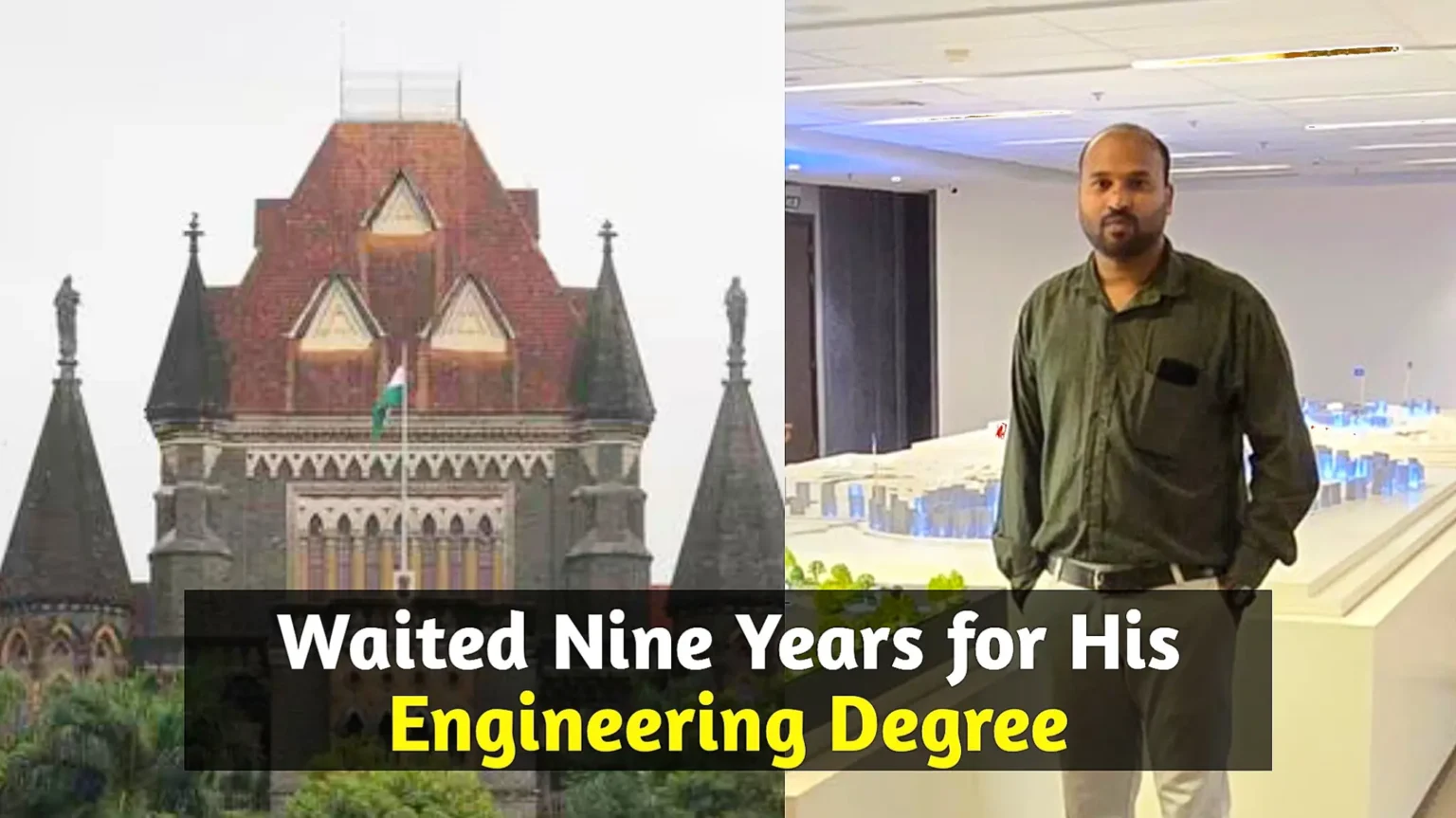
In 2017, Farukh Ilahi Sayyad finished his electrical engineering course from the Finolex Academy of Management and Technology in Ratnagiri. Like thousands of engineering graduates across Maharashtra, he expected to collect his marksheet, apply for jobs and begin working in his field.
That did not happen. For nearly nine years, the Beed resident remained without his final degree certificate because of a legal and administrative dispute linked to Maharashtra’s now-defunct Muslim reservation policy.
Farukh, who comes from Jawalben village in Beed district, had secured admission through the Special Backward Category-A (SBC-A), a 5 per cent reservation introduced in 2014 for socially and educationally backward Muslim communities by the then Congress-NCP government. The quota was announced months before the Assembly elections and immediately became the subject of political and legal controversy.
As reported by journalist Zeeshan Shaikh for The Indian Express, Farukh had scored more than 72 per cent in his diploma course, making him eligible for direct second-year admission in engineering. Initially, he received a seat in Pune. However, the fees there were too expensive for his family. His father worked as a daily wage labourer, and arranging over Rs 1 lakh annually for tuition and living costs was beyond their means.
The admission he eventually accepted at the Ratnagiri college was financially manageable because it fell under the SBC-A quota structure then in force. But the policy itself did not survive for long.
In 2014, the Bombay High Court stayed the Maratha reservation introduced alongside the Muslim quota. The court, however, allowed reservation for Muslims in educational institutions to continue temporarily. The problem arose later when the ordinance creating the quota was not converted into a permanent law and eventually lapsed. Students who had already taken admission under that category found themselves stuck between changing government policies and incomplete documentation procedures.
Farukh had obtained the required caste certificate during admission, but later authorities refused to issue him a caste validity certificate because the reservation category itself no longer existed in practice. Without the validity certificate, the University of Mumbai withheld his final marksheet and engineering degree despite him completing the course successfully.
The issue followed him for years. According to submissions made before the Bombay High Court, Farukh repeatedly approached authorities seeking a resolution. He also paid the fee difference applicable to open-category students. Yet his academic documents remained pending.
Without a formal degree certificate, career opportunities became limited. In 2018, he left India for work in the Gulf, first moving to Kuwait and later to Dubai. Although he had completed an engineering course, he largely depended on his diploma qualifications while applying for jobs overseas.
His legal battle finally ended in May 2026 when the Bombay High Court directed the University of Mumbai to release his degree and related documents. The bench of Justices R.I. Chagla and Advait M. Sethna observed that a student could not be penalised for confusion created by shifting state policies after admission had already been granted. The court noted that Farukh was not seeking reservation benefits anymore and had already fulfilled the financial requirements applicable to general-category students.
The case has once again drawn attention to students affected by abruptly altered reservation policies in Maharashtra. Over the last decade, multiple quota decisions involving Maratha, Muslim and OBC reservations have led to prolonged litigation, uncertainty in admissions and confusion over certificates.
For families in districts such as Beed, higher education often involves major financial sacrifice. Delays in issuing academic documents can affect employment, postgraduate admissions and overseas opportunities for years. Earlier this year, the Maharashtra government formally withdrew all remaining administrative resolutions related to the Muslim quota, stating that the ordinance had ceased to exist legally long ago. Opposition parties criticised the decision, arguing that students admitted during that period were left to face the consequences alone.
Farukh’s case reflects how policy disputes can continue affecting ordinary students long after political debates move elsewhere. By the time he finally received legal relief, almost a decade had passed since he had completed his engineering course.