








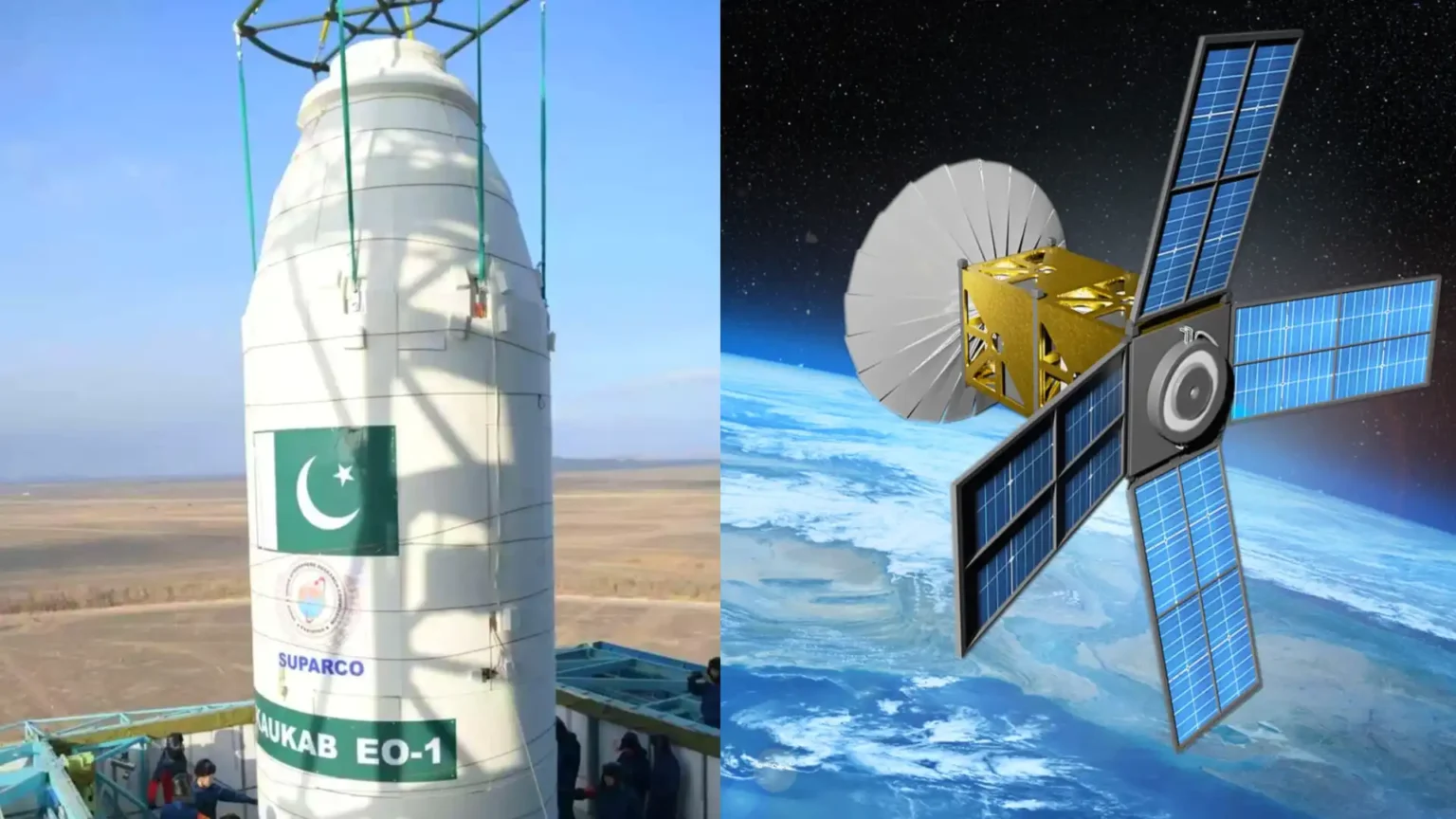
When Pakistan’s PRSC-EO3 satellite lifted off aboard a Chinese Long March-6 rocket from the Taiyuan Satellite Launch Center in April 2026, the launch attracted attention well beyond the country’s small but growing space community.
The mission was the latest in a series of Earth-observation satellite launches that have taken place since early 2025. Taken together, they suggest that Pakistan is pursuing a far more active space programme than it did during most of the previous decade. For years, Pakistan’s presence in space remained relatively limited. Major satellite projects appeared only occasionally, and the programme rarely featured in regional discussions about technology or strategic capabilities. That changed noticeably last year.
In January 2025, Pakistan launched PRSC-EO1, an electro-optical observation satellite developed under the supervision of SUPARCO, the country’s national space agency. Officials described the project as a step toward strengthening domestic satellite technology and improving access to Earth-observation data.
Several months later came another milestone with the launch of HS-1, Pakistan’s first hyperspectral imaging satellite. The mission expanded the country’s remote-sensing capabilities and demonstrated a level of technical ambition not often associated with Pakistan’s space sector in the past.
The launches arrived against the backdrop of growing demand for satellite imagery. Governments increasingly use Earth-observation data to monitor agricultural production, assess flood damage, track environmental changes and support infrastructure planning. Pakistan’s own experience with devastating floods and recurring climate-related challenges has increased the value of such capabilities.
Yet the discussion surrounding these satellites has not focused solely on environmental monitoring or development planning. Observation satellites occupy an unusual space in modern technology. The same imagery used by civilian agencies can also provide information useful for security planning. That reality explains why new launches often attract attention from defence researchers alongside scientists and engineers.
In South Asia, where technological developments are closely watched by neighbouring countries, satellite programmes rarely remain purely technical stories. India and Pakistan have both expanded investments in surveillance, intelligence-gathering and space-based monitoring systems over the past several years. As a result, each major launch is often viewed through both a technological and strategic lens.
China’s involvement has added another dimension to the conversation. Recent Pakistani satellites have been launched using Chinese rockets and facilities, reflecting a long-standing partnership that extends from infrastructure and energy projects to aerospace cooperation.
The relationship has provided Pakistan with access to launch capabilities that would otherwise require enormous investment and decades of development. For Beijing, cooperation with Islamabad has become one part of a broader network of international space partnerships.
What stands out most, however, is the speed of Pakistan’s recent progress. A country that once launched satellites sporadically now appears to be building a more regular observation programme. Space analysts have noted that sustained activity is often a better indicator of long-term capability than any individual mission. One successful launch can be symbolic; a series of launches points to an expanding institutional effort.
That shift is why recent missions have attracted growing interest across the region. The conversation is no longer limited to whether Pakistan can place a satellite into orbit. The focus has moved toward what kind of observation network the country intends to build and how quickly those capabilities may develop.
Officials in Islamabad continue to emphasize practical applications such as agriculture, disaster management and environmental monitoring. Those goals remain central to public descriptions of the programme. At the same time, regional observers are paying close attention to the pace of development and the technologies being introduced.
The launch of PRSC-EO3 did not dramatically alter the balance of power in South Asia. But it served as another sign that Pakistan’s space programme is entering a different phase from the one that existed just a few years ago. With multiple Earth-observation satellites now in orbit and additional projects expected in the future, the country’s activities in space are likely to receive far more scrutiny than they once did.