












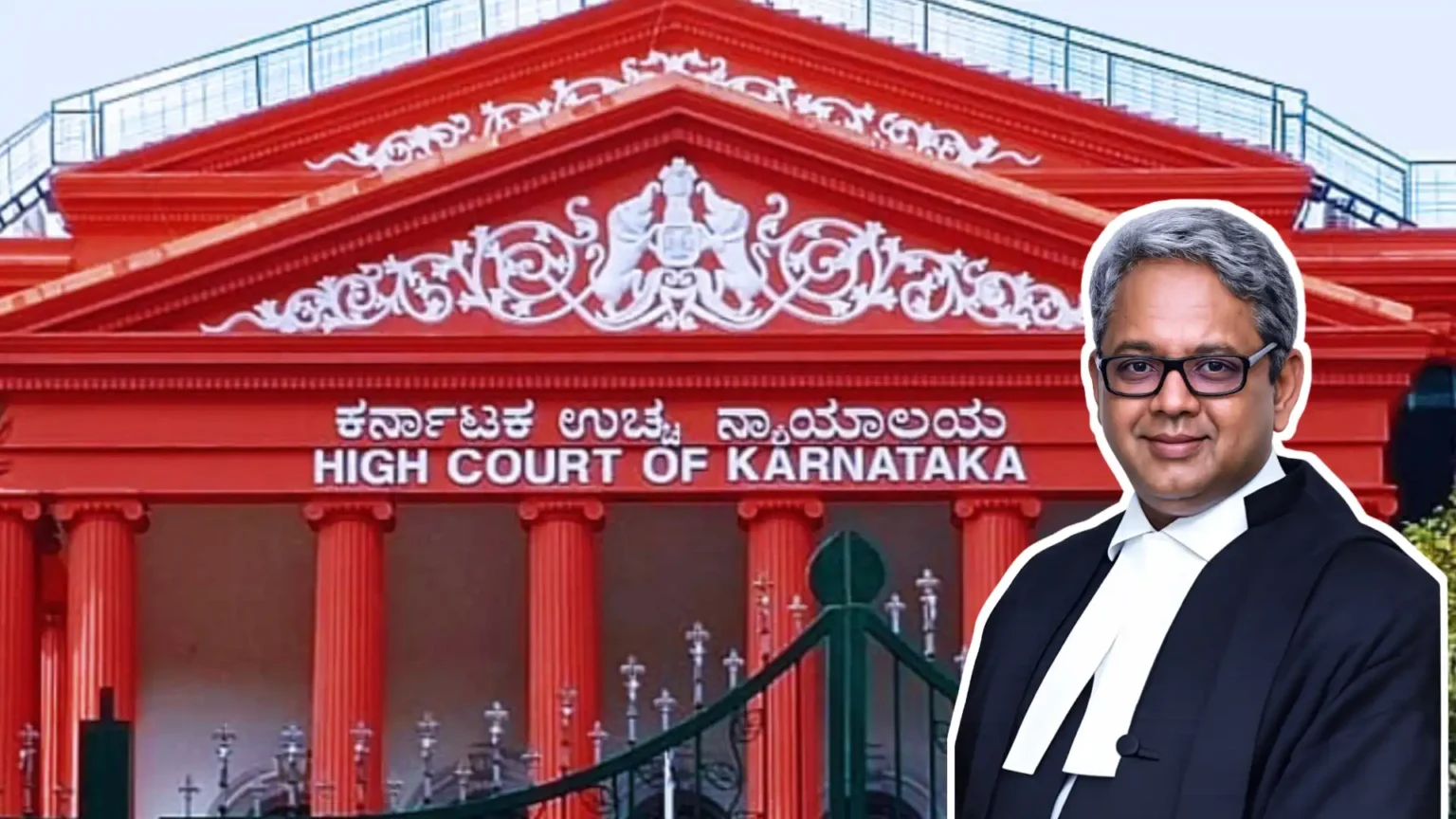
The Karnataka High Court has ruled that holding public office does not mean an individual forfeits their constitutional right to privacy. In a significant judgment, Justice Suraj Govindaraj clarified the limits of information disclosure under the Right to Information (RTI) Act, holding that personal records of public servants cannot automatically be made available to the public merely because they are government employees.
The ruling came in a case involving S. Savithramma, who sought details relating to the assets and liabilities of S.P. Jayapal, a Deputy Controller at the Karnataka State Road Transport Corporation (KSRTC) Central Office. The court observed that public servants do not lose their privacy rights simply because they hold public office and that personal information continues to enjoy protection under the RTI Act.
Case Details
Case: Smt. S. Savithramma v. The Karnataka Information Commission & Ors.
Court: Karnataka High Court Judge: Justice Suraj Govindaraj
Writ Petition: W.P. No. 21831 of 2025
Date of Judgment: June 1, 2026
Petitioner’s Advocate: Sri. G.B. Nandish Gowda
Information Sought Under RTI
The dispute arose after Savithramma filed an RTI application seeking asset and liability statements submitted by Jayapal for the period 1997 to 2005 during his tenure with KSRTC. According to the petitioner’s claim, Jayapal had fraudulently obtained a sale deed from her. She argued that access to his financial and property-related information was necessary in connection with pending civil disputes between them.
The RTI request was rejected by the concerned Public Information Officer. The Karnataka Information Commission subsequently upheld the rejection, prompting Savithramma to approach the High Court.
Asset Declarations Do Not Automatically Become Public
Before the High Court, it was argued that information furnished by a public servant to an employer under service rules should be considered public information and therefore available under the RTI Act.
The court rejected this contention. Justice Govindaraj held that the mere fact that a public servant is required to submit information such as asset declarations or other personal records to an employer does not automatically make those records open to public disclosure. The judgment emphasized that information submitted to a government department for official or administrative purposes does not lose its private character solely because it is held by a public authority.
Privacy Rights Continue to Apply
The High Court observed that personal information relating to assets, liabilities, financial affairs, income particulars, tax records, family matters and medical records remains protected under the RTI framework. The court cautioned against an interpretation of the law that would expose every aspect of a public servant’s private life simply because that individual holds government office.
Justice Govindaraj noted that if every piece of information concerning public servants were treated as disclosable, an entire class of individuals would lose protections available under the RTI Act merely because they happen to hold public office.
The ruling reaffirmed that government employees continue to enjoy privacy rights despite their public responsibilities.
Section 8(1)(j) of the RTI Act
The court referred to Section 8(1)(j) of the RTI Act, which exempts personal information from disclosure when it has no relationship to any public activity or public interest, or where disclosure would result in an unwarranted invasion of privacy.
According to the judgment, the information sought by the petitioner fell within the category of personal information protected under this provision.
The court stressed that requests for such information must be assessed carefully, taking into account the privacy rights of the individual concerned.
RTI Cannot Be Used for Private Disputes
A key aspect of the judgment was the court’s distinction between private disputes and matters that warrant disclosure under the RTI Act. The High Court noted that Savithramma sought the information in connection with her allegations regarding a disputed property transaction and the ongoing civil proceedings arising from it.
The court held that the RTI mechanism cannot be used to obtain personal information solely for the purpose of pursuing a private dispute. While acknowledging the petitioner’s allegations, the court found that the information sought related to a personal grievance rather than a matter warranting disclosure under the RTI framework.
Petition Dismissed
After examining the case, the Karnataka High Court upheld the decisions of both the Public Information Officer and the Karnataka Information Commission.
The writ petition was dismissed, with the court concluding that the requested records could not be disclosed under the RTI Act. The judgment reinforces the principle that transparency in public administration must be balanced with an individual’s right to privacy. It also clarifies that public servants do not surrender their privacy protections merely because they occupy government positions. The ruling is expected to serve as an important reference in future disputes involving requests for personal information relating to government employees and public officials under the RTI Act.


