










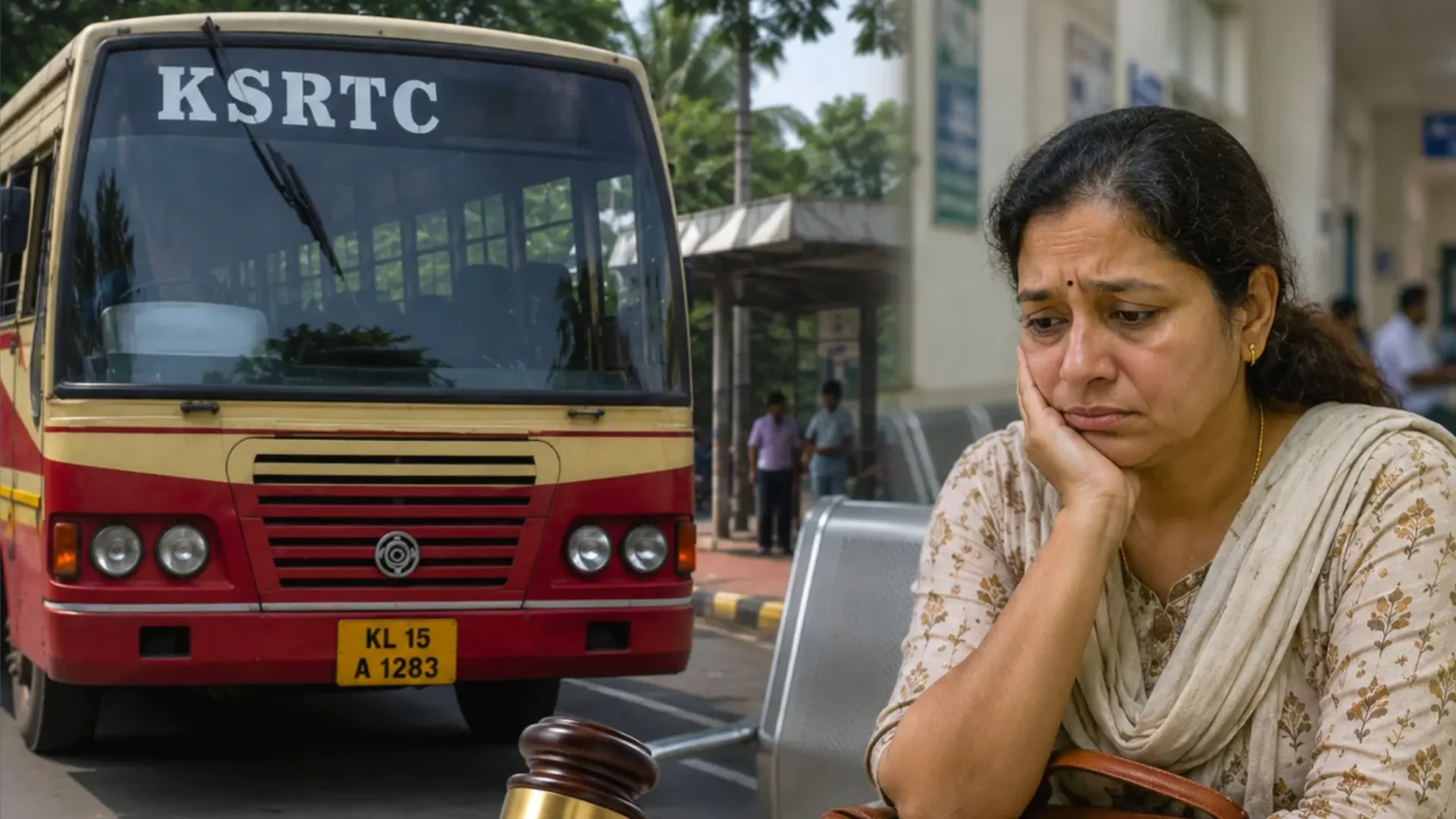
The Consumer Disputes Redressal Commission, Pathanamthitta in Kerala has directed the Kerala State Road Transport Corporation (KSRTC) to pay Rs 35,000 in compensation to a woman who missed a crucial hospital appointment after a reserved bus departed before its scheduled time.
The ruling came after the forum found that the transport corporation had failed to provide the service promised to the passenger, holding that a bus leaving ahead of schedule and causing a reserved passenger to miss the journey amounted to a clear deficiency in service.
The incident occurred on August 24, 2024, when the woman booked a seat on a KSRTC Super Fast bus for travel to Ernakulam. According to the complaint, the bus was scheduled to leave Thiruvalla at 8 am. The passenger had planned the trip to attend a medical consultation at 12.30 pm and had already paid a consultation fee of Rs 500.
The woman told the forum that she arrived at the bus stop around 7.30 am, giving herself enough time to board the service. However, the bus did not arrive at the scheduled time. After waiting until approximately 8.10 am, she contacted the bus crew to inquire about the delay.
She was then informed that the bus had already crossed Thiruvalla and reached Kottayam. The crew allegedly advised her to board another bus. By then, reaching the hospital on time had become impossible, forcing her to miss the appointment.
The complainant argued that the incident caused not only financial loss but also significant inconvenience. Apart from losing the consultation fee, she had to arrange another hospital visit and take leave from work on a different day. She maintained that she had relied on the official timetable published by KSRTC while making her travel plans and booking the ticket.
During the proceedings, KSRTC contested the complaint. The corporation argued that the conductor who operated the service had not been made a party to the case. It also submitted that the conductor had been provided with the reservation chart containing the details of passengers, including the complainant. After examining the evidence, the consumer commission rejected the corporation’s defence and focused on whether the service had been delivered as promised to the passenger.
The forum noted that passengers who purchase tickets based on a published schedule have a legitimate expectation that the service will operate according to that timetable. It observed that the bus crew failed to report the vehicle at the Thiruvalla depot at the scheduled time, which was contrary to the prescribed operating procedure.
In its order, the commission held that the early departure of the bus deprived the complainant of the opportunity to board a service for which she had already purchased a reserved ticket. The forum observed that the corporation had advertised and sold a ticket based on an 8 am departure but failed to provide the service at that time. The commission described the lapse as an imperfection in the service provided by the transport corporation and held that it amounted to deficiency in service under consumer protection laws. It further observed that buses should not leave intermediate boarding points before the scheduled departure time, particularly when passengers with confirmed reservations are expected to board.
Holding KSRTC responsible for the inconvenience and losses suffered by the woman, the consumer forum ordered the corporation to pay ₹25,000 as compensation for mental agony and ₹10,000 towards litigation costs. Additionally, the commission directed KSRTC to refund the original ticket fare of ₹146 along with 9% interest from the date the complaint was filed.
The ruling serves as a reminder that public transport operators are expected to adhere to published schedules and honour commitments made to passengers. Consumer forums have repeatedly held that passengers who suffer losses because of service failures are entitled to seek compensation under the law.
The case also highlights how even a seemingly minor deviation from a published timetable can have serious consequences for passengers, particularly when journeys are linked to important commitments such as medical appointments. By holding the transport corporation accountable, the forum reinforced the principle that service providers must ensure reliability and fairness for consumers who depend on them.


