












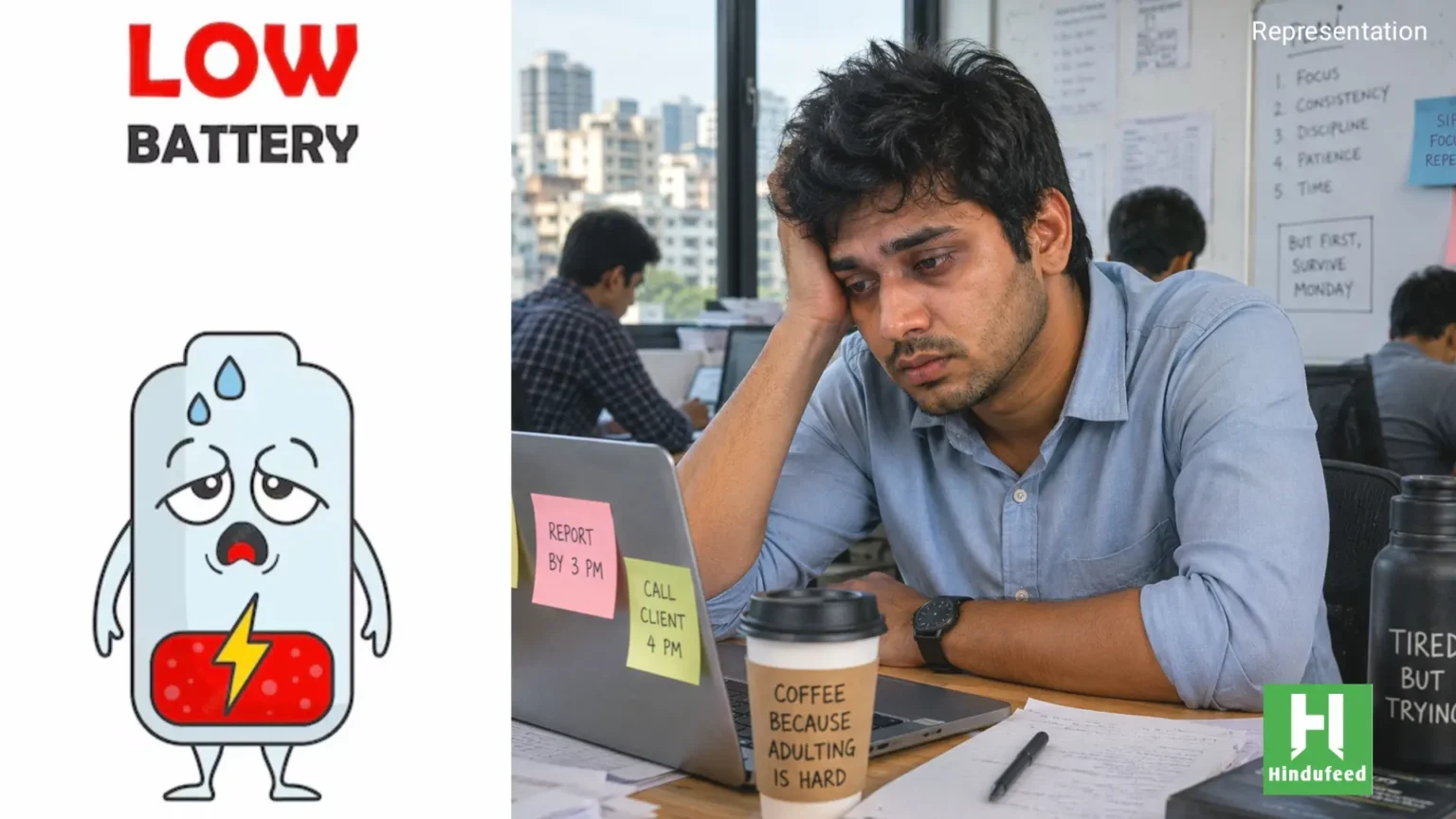
At the peak time in the morning, highways, public transports, metros, local railways are already crowded with half awake commuters. Some stare blankly through cab windows while checking Slack notifications. Others scroll endlessly through LinkedIn posts about productivity, startup culture, or career growth before they even reach the office. Coffee cups have become almost permanent accessories.
The strange thing is that most of them are not physically exhausted in the traditional sense. They are mentally tired before the day has even properly started.
That feeling has become incredibly common among young adults. Across colleges, offices, coworking spaces, and event social gatherings, people in their 20s constantly describe themselves as drained, burnt out, or running on empty. And unlike ordinary tiredness, this exhaustion often refuses to disappear after sleep or a weekend break.
Something about modern life feels permanently overwhelming.
The Brain Rarely Gets a Real Pause
A generation ago, boredom existed more naturally. People waited quietly at bus stops, sat through train riders without constant stimulation, or simply spent time alone with their thoughts.
Now even the tiny moments of silence get filled immediately. Phones paper during elevator rides, traffic signals, meals and sometimes even in the middle of conversations. The Brain keeps switching rapidly between notifications, reels, work messages, news updates, memes and social media comparisons without ever slowing down properly.
Researchers have increasingly linked excessive smartphone and social media use with stress, anxiety, poor sleep and mental fatigue among younger adults. A 2024 review published in Current Psychiatry Reports found strong connections between heavy social media use and emotional exhaustion in young people.
Sleep Looks Normal But Feels Broken
Many young adults technically sleep enough hours yet still wake up exhausted.
Part of the problem is obvious; late-night scrolling has quietly become routine. One reel becomes ten. A quick notification check somehow turns into an hour online. Suddenly it is 2 AM and the brain still feels overstimulated.
Sleep researchers have repeatedly warned that excessive screen exposure before bed affects sleep quality and emotional recovery. (health.com)
But there is also something deeper happening psychologically. Before sleeping, many people consume a huge amount of emotional information, productivity advice, bad news, relationship content, financial anxiety, self-improvement videos, political outrage, and unrealistic lifestyle clips. The mind absorbs far more stimulation than it can calmly process before rest.
People fall asleep tired and wake up tired again.
Hustle Culture Turned Exhaustion Into Status
There is now a strange social pride attached to being busy. Young adults constantly hear messages telling them to optimize every part of life, build careers early, earn money, learn new skills, maintain perfect health, network online, stay productive, and somehow still maintain a social life. Rest starts feeling underserved.
Money Anxiety Never Really Leaves
The previous generation dealt with stress too, but many young adults today are entering adulthood during a period of raising rents, unstable job markets, and increasingly expensive urban living.
That low-level anxiety rarely switches off completely. Spending hours daily stuck in Bengaluru traffic slowly drains emotional energy in ways people rarely discuss directly. Sometimes the tiredness is not dramatic at all . It is just cumulative.
Constant Connection Created a Different Kind Of Loneliness
One of the strongest parts of modern life is that people are more digitally connected than ever while often feeling emotionally disconnected at the same time.
Notifications create the illusion of constant interaction, but many conversations now happen in fragments between distractions. Attention is divided constantly. Real silence feels unfamiliar. Deep rest feels strangely difficult.
At some point, the exhibition stops feeling temporary and starts becoming part of the identity itself.
People joke online about burnout almost casually now. Students discuss anxiety between lectures like everyday conversation. Being tired all the time has almost become part of youth culture. And maybe that says something important about the world young adults are trying to survive in.
The problem may not be that this generation is weaker than previous ones. It may simply be the modern life has become mentally louder, faster, and more emotionally demanding than human beings were ever designed to handle continuously.


